
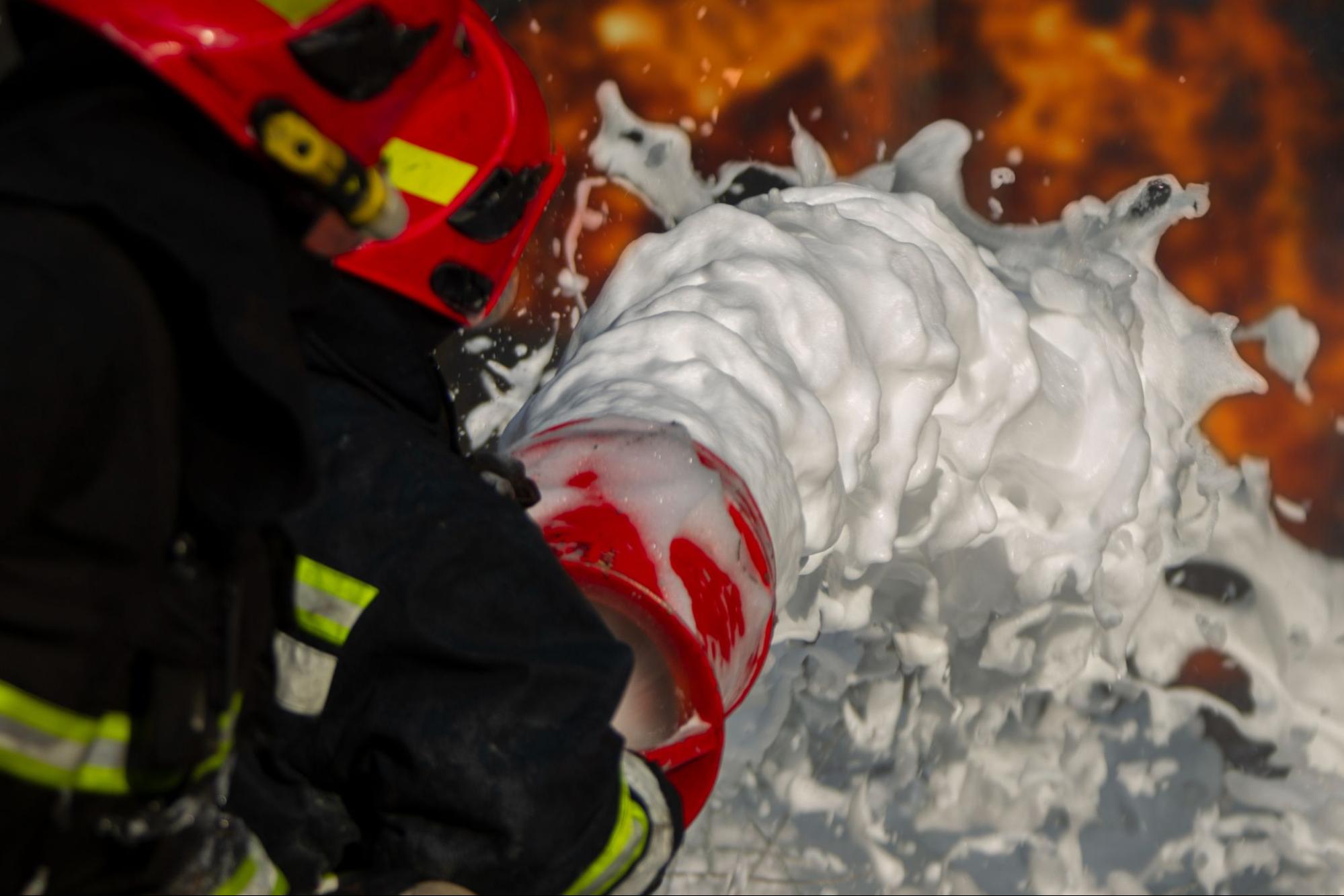
Firefighting foam is an important fire suppression tool when water alone may not provide the control or coverage a fire requires. Different foam formulations are designed for different fuels and hazards, so choosing the right product requires more than selecting a foam concentrate. Fire departments and industrial facilities need to consider the fuel involved, application method, equipment compatibility, and conditions where the foam will be used.
Firefighting foam can cool burning materials, suppress flammable vapors, and create a protective layer over a fuel surface that helps prevent reignition. The two main types of firefighting foam are Class A foam and Class B foam. Within those two classes, there are several additional types, including Aqueous Film Forming Foam (AFFF), Alcohol-Resistant Aqueous Film Forming Foam (AR-AFFF), protein-based foam, and fluorine-free foam.
How Firefighting Foam Works
Firefighting foam concentrate is mixed with water to create a foam solution. Air is then incorporated through a nozzle, eductor, or other foam-generating equipment to create finished foam.
When applied, foam can form a blanket over the fuel surface. Depending on the formulation, this blanket helps separate the fuel from heat and ignition sources while suppressing flammable vapors. The water contained in the foam also provides cooling.
Surfactants in many foam formulations reduce surface tension, helping the solution spread across surfaces and penetrate certain fuels or combustible materials.
Key Foam Properties
Several properties affect how foam performs:
- Expansion Ratio: Determines how much finished foam is produced from a given amount of foam solution and affects coverage and thickness.
- Drain Time: Indicates how long liquid drains from finished foam and can affect how long the blanket remains effective.
- Fluidity: Affects how easily foam spreads across a fuel surface.
- Burnback Resistance: Measures how well foam resists heat and helps prevent reignition.
- Fuel Tolerance: Describes how well the foam maintains stability when exposed to a particular fuel.
The foam that works for one fire scenario may not be appropriate for another.
Foam Application Methods
Fire departments and industrial facilities can apply foam using several types of equipment.
- Aspirating Nozzles: Incorporate air into the foam solution and can produce higher-quality foam.
- Non-Aspirating Nozzles: Produce different foam characteristics and may be appropriate for certain listed products.
- Compressed Air Foam Systems (CAFS): Use compressed air to produce foam and are commonly used on fire apparatus.
- Fixed Foam Systems: Used in some industrial facilities.
The correct application method depends on the foam product, equipment, concentration, and manufacturer’s instructions.

Class A Firefighting Foam
What Class A Foam Is
Class A foam is designed primarily for fires involving ordinary combustible materials such as wood, paper, and vegetation. It enhances water’s effectiveness by reducing surface tension, allowing water to spread across and penetrate combustible materials more effectively.
Class A foam is commonly used in wildland and structural firefighting. It is generally used at lower concentrations than many Class B foam products, although the correct concentration depends on the specific product and manufacturer’s instructions.
Applications for Class A Foam
Class A foam can be used for:
- Wildland fire suppression and mop-up
- Structural firefighting
- Exposure protection during exterior operations
- Overhaul
- Vehicle fires involving ordinary combustibles
Improved water penetration can help crews use water supplies more effectively. During overhaul, foam can help water reach areas where ordinary water application may be less effective.
Advantages of Class A Foam
Depending on the application, Class A foam can:
- Increase water penetration
- Reduce water consumption
- Support faster fire knockdown and overhaul
- Provide visible coverage
Formulations vary by manufacturer. Biodegradable options are available, but departments should review each product’s environmental and safety information before selecting a concentrate.
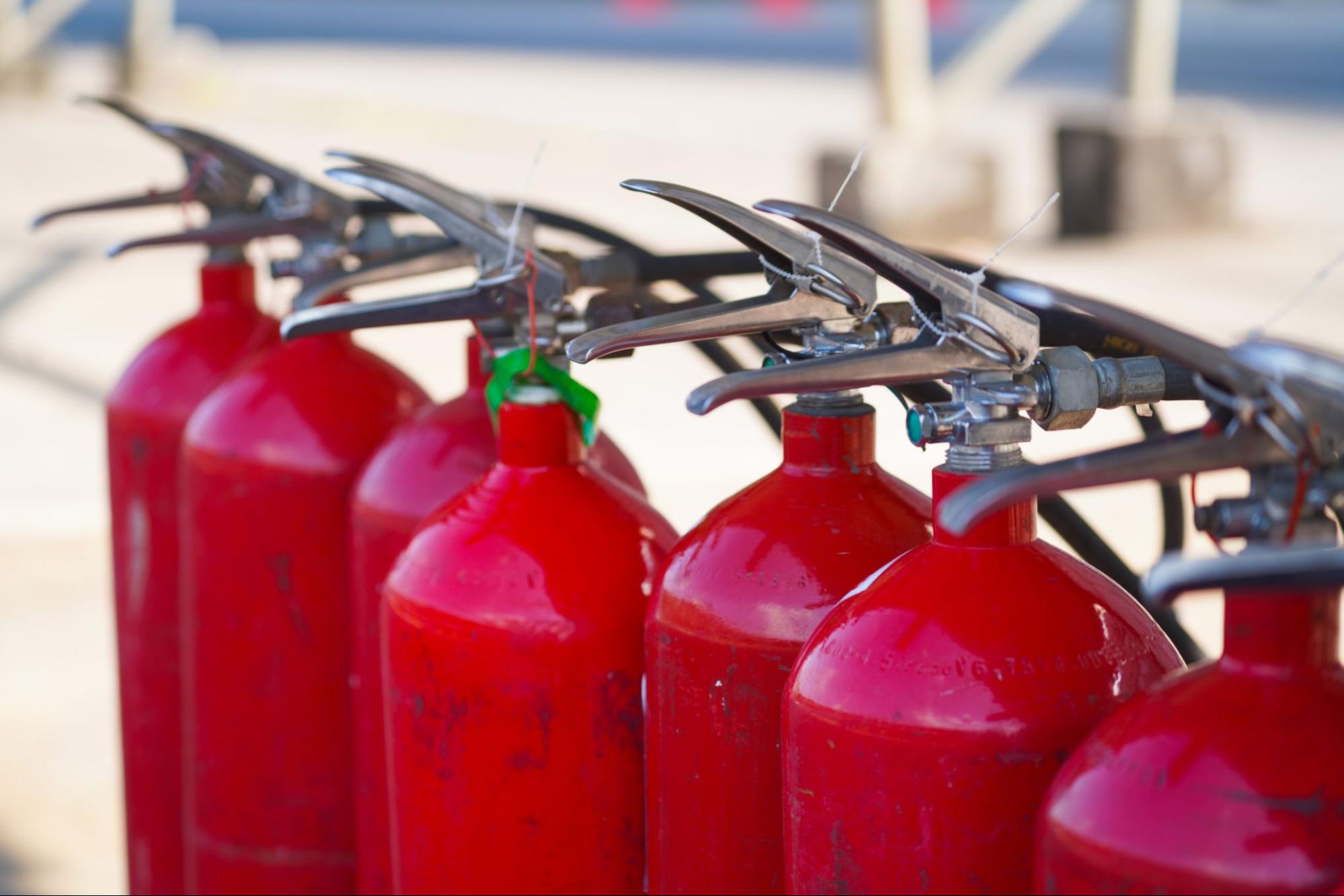
Class B Firefighting Foam
What Class B Foam Is
Class B foam is designed for fires involving flammable and combustible liquids, including fuels, oils, and certain solvents. These foams create a vapor-suppressing blanket over the fuel surface.
Different formulations are available because liquid fuels behave differently during suppression.
When Class B Foam Is Needed
Class B foam may be used for:
- Fuel spill fires at gas stations or industrial sites
- Aircraft rescue and firefighting operations
- Vehicle fires involving fuel
- Industrial flammable-liquid storage
- Marine fires involving fuel or cargo
The appropriate foam depends on the specific fuel and the product’s listing and application requirements.
Hydrocarbon Fuels vs. Polar Solvents
An important distinction in Class B foam selection is the difference between hydrocarbon fuels and polar solvents.
Hydrocarbon fuels include gasoline, diesel, jet fuel, and petroleum-based oils. Polar solvents include alcohols, ketones, and esters.
Standard Class B foams may be designed for hydrocarbon fuels, while polar solvent fires generally require an alcohol-resistant formulation. Polar solvents can attack and destroy conventional foam blankets, making proper foam selection important.
Aqueous Film-Forming Foam (AFFF)
Aqueous film-forming foam (AFFF), is a Class B foam historically used for hydrocarbon fuel fires. AFFF contains fluorinated surfactants and PFAS chemicals that allow the foam solution to form an aqueous film across certain fuel surfaces.
The film can spread rapidly across hydrocarbon fuels, helping suppress flammable vapors and support fire knockdown. AFFF has a long history of use in military, aviation, petroleum, marine, and industrial fire protection.
How AFFF Works
AFFF’s low surface tension allows the aqueous film to spread across the fuel surface. The film can continue providing fuel-vapor suppression as the foam blanket drains.
Historically, these characteristics made AFFF useful for applications where rapid fire suppression and burnback resistance were important.
AFFF Applications
AFFF has historically been used in:
- Airport rescue and firefighting
- Military bases
- Petroleum industry fire protection
- Shipboard firefighting systems
- Industrial flammable-liquid storage
Specific requirements vary, so departments should confirm which products are currently permitted and appropriate for their operations.
PFAS Concerns With AFFF
A major consideration with AFFF is its association with per- and polyfluoroalkyl substances (PFAS). PFAS are a large group of persistent chemicals, and concerns about their environmental persistence have resulted in increased regulatory attention and restrictions.
Organizations using or storing AFFF should consider potential contamination associated with training and firefighting activities. Requirements for use, storage, collection, and disposal measures vary by jurisdiction, so departments should review current federal, state, and local requirements.
Alcohol-Resistant Aqueous Film-Forming Foam (AR-AFFF)
Alcohol-resistant AFFF is designed to provide protection against hydrocarbon fuels and certain polar solvents when the specific product is listed for those applications. AR-AFFF contains a polymer that helps form a protective membrane when the foam contacts certain polar solvents. This helps prevent the fuel from breaking down the foam blanket.
When AR-AFFF Is Used
Potential applications include:
- Ethanol and methanol fuel fires
- Industrial solvent spills and fires
- Chemical plant incidents
- Certain fuel blends containing alcohol
- Other polar solvent emergencies
AR-AFFF can also be used on appropriate hydrocarbon fires when the product is listed for the application and used according to manufacturer specifications. However, because fluorinated AR-AFFF contains PFAS, it also carries the environmental and regulatory considerations associated with other fluorinated firefighting foams.
Fluorine-Free Foams (F3)
Fluorine-free foam is formulated without intentionally added fluorinated chemicals such as PFAS. These products have been developed as alternatives to fluorinated Class B foams as organizations respond to changing PFAS requirements.
Different fluorine-free products use different surfactant systems and formulations. Performance can vary between products, so departments should evaluate the specific product and avoid treating all F3 foams as interchangeable.
Advantages of Fluorine-Free Foams
One of the primary reasons organizations are evaluating fluorine-free foam is the absence of intentionally added PFAS.
Other considerations can include:
- Reduced concerns associated with PFAS-containing foam products
- Availability of biodegradable formulations
- Compatibility with changing environmental requirements
Departments should still confirm each product’s environmental characteristics, listings, and disposal requirements.
Fluorine-free options can include synthetic, protein-based, high-expansion, Class A, Class B, and multipurpose formulations.
Protein-Based Foams
Protein foam is derived from hydrolyzed animal proteins. These products can create a thick, stable foam blanket with good heat resistance.
Protein-based formulations are less common in some modern applications but can still have specialized uses.
Types of Protein Foams
Traditional protein-related categories include:
- Regular protein foam (P)
- Fluoroprotein foam (FP)
- Film-forming fluoroprotein foam (FFFP)
- Alcohol-resistant fluoroprotein foam (AR-FP)
Fluoroprotein and film-forming fluoroprotein products contain fluorinated chemistry, while fluorine-free protein products do not intentionally contain those components.
Protein Foam Applications
Protein foam can be used for:
- Bulk fuel storage protection
- Subsurface injection systems
- Large-scale fuel fires
- Applications requiring a long-lasting foam blanket
- Industrial fixed suppression systems
Protein foam’s performance differs from many synthetic foams, and some protein-based products may have slower knockdown characteristics.

Choosing the Right Foam Type
Selecting a fire suppression foam starts with understanding the hazards a department or facility actually faces.
Assessing Response Area Hazards
Identify the types of fuel and fire hazards crews are likely to encounter. Consider:
- Flammable liquid hazards
- Specific fuel types
- Industrial facilities and stored materials
- Transportation routes and cargo risks
This information helps determine what foam capabilities the department needs.
Equipment Compatibility
Before purchasing, review:
- Proportioning system requirements
- Nozzle and delivery device compatibility
- Storage and handling requirements
- Shelf life and rotation needs
- Training and maintenance requirements
Crews should also understand the foam’s operating characteristics and application procedures.
Regulatory Considerations
PFAS regulations are an increasingly important part of foam selection. Organizations may need to consider:
- State and federal PFAS foam restrictions
- Requirements for proper disposal
- Training-site PFAS contamination concerns
- Environmental permitting
- Future regulatory changes
Requirements can change and vary by location, so departments should verify the rules that apply to their operations before purchasing, using, storing, or disposing of foam.
Cost and Logistics
The cost of foam involves more than the purchase price. Departments should consider:
- Concentrate cost per gallon
- Required application rates
- Storage requirements
- Shelf life and product rotation
- Availability of foam for training exercises
- Disposal costs for expired or unwanted concentrate
A lower purchase price may not mean lower overall costs if the product requires different equipment, higher application rates, or specialized disposal.
Understanding Firefighting Foam Types
Firefighting foam ranges from Class A formulations that improve water performance on ordinary combustibles to specialized Class B products designed for flammable-liquid hazards. Choosing the right fire suppression foam starts with the hazards a department or facility expects to face, followed by equipment compatibility, product specifications, and environmental and regulatory requirements. Consider the fuels, fire scenarios, equipment, and response needs in your area before selecting a foam system or concentrate for your apparatus.
Find the Right Fire Apparatus with Fouts Fire
At Fouts Fire, we know how important it is for fire departments to have access to durable, high-quality fire equipment that matches their community’s needs. We offer state-of-the-art standardized fire apparatus models that are available throughout the United States and Canada. Find a Dealer near you to get started today! For additional information, reach out to our team.