At a Glance: Choosing the right fire truck manufacturer requires looking beyond the initial purchase price. Departments should compare build quality, customization options, production processes, warranty coverage, parts availability, dealer support, and long-term service to find a manufacturer that can support the apparatus throughout its service life.
Purchasing a fire apparatus is one of the largest investments a fire department will make. The manufacturer you choose can affect the apparatus’s build quality, performance, serviceability, and long-term ownership costs.
Fire truck manufacturers vary in their specialties, production methods, customization options, dealer networks, and customer support. Because a fire apparatus may serve a department for decades, warranty support, parts availability, repairs, and technical assistance should all be considered before making a purchase.
Choosing a manufacturer should involve more than comparing prices. Departments should evaluate the complete ownership experience and select a fire truck company that can support the apparatus throughout its service life.
Understanding Manufacturer Types
Not every fire apparatus manufacturer approaches the market in the same way. Understanding the differences can help departments narrow their options.
Large National Manufacturers
Large manufacturers produce significant numbers of fire apparatus each year and often have established dealer networks across multiple regions. Their size may provide access to broader product lines, engineering resources, standardized production processes, and extensive parts networks.
A larger manufacturer may also have experience building many apparatus configurations. However, size alone does not make a manufacturer the right choice. Evaluate the specific product, local service capabilities, warranty terms, and experience with apparatus similar to yours.
Regional and Specialty Manufacturers
Some manufacturers focus on particular regions, apparatus types, or customer needs. These companies may provide specialized expertise or a more direct working relationship during the design and purchasing process. A specialty manufacturer can be useful when a department needs an unusual configuration or operates in challenging terrain.
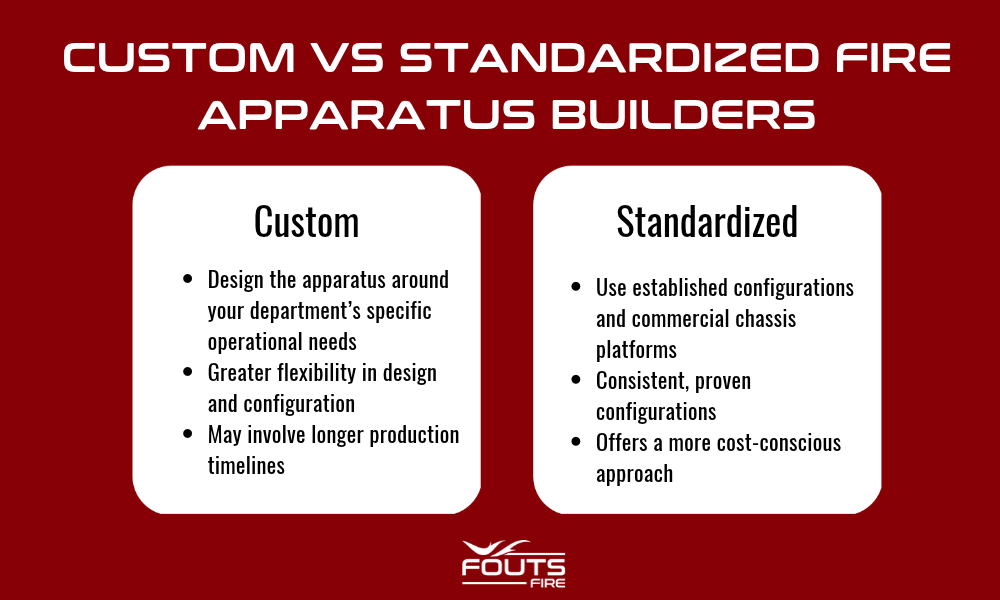
Custom Fire Apparatus vs. Standardized Fire Apparatus Builders
Standardized builders work with departments to develop an apparatus around specific operational requirements. This can provide greater flexibility but may require additional engineering, design work, and production time.
Commercial builders generally use established configurations and commercial chassis platforms. These can be practical for departments seeking a consistent apparatus lineup or shorter production timelines.
Reputation and Track Record
A manufacturer’s history can provide useful insight into what ownership may look like after delivery.
Industry Experience
Research how long the manufacturer has been building fire apparatus, how its products have evolved, and its continued involvement in the fire service. Ownership changes and company stability may also be worth considering. Experience does not guarantee quality, but a strong track record gives departments more information to evaluate.
References From Other Departments
Reference checks are one of the most useful parts of fire truck purchasing. Ask for departments operating apparatus similar to the one you are considering.
Look for departments with comparable:
- Budgets
- Call volumes
- Apparatus types
- Terrain and climate
- Staffing levels
- Maintenance capabilities
Ask how the apparatus has performed after several years of ownership, not just when it was new. Questions about warranty service, repairs, parts availability, downtime, and manufacturer communication can reveal issues that may not appear in a sales presentation.
Industry Recognition and Manufacturer History
Look at the manufacturer’s involvement in the fire service, approach to safety and technology, and response to changing industry requirements. Trade publications, fire service organizations, conferences, and apparatus events can provide additional information. If a manufacturer or specific apparatus has experienced recalls or safety issues, find out how the company communicated and resolved them.
Build Quality and Materials
The quality of an apparatus affects its performance, maintenance requirements, and service life.
Construction Standards
Ask how the manufacturer approaches structural design, testing, welding, corrosion protection, and quality control. Departments should also understand which applicable National Fire Protection Association (NFPA) standards the apparatus is designed to meet and request documentation when appropriate.
Body and Frame Materials
Different materials offer different advantages. The right material depends on the apparatus design, operating environment, weight requirements, and budget.
- Steel: Can provide strength and durability but may add weight and require appropriate corrosion protection.
- Aluminum: Can reduce weight and provide corrosion resistance benefits.
- Stainless Steel: Can be useful where corrosion resistance is a priority.
The right material depends on the apparatus design, operating environment, weight requirements, and budget.
Component Quality
The body is only one part of a fire apparatus. Evaluate major components such as:
- Pump and pump controls
- Water tank
- Plumbing and valves
- Electrical system and lighting
- Hardware and fasteners
- Compartments and doors
- Chassis components
Ask which manufacturers supply major components and whether replacement parts are expected to remain available throughout the apparatus’s service life.
Fit and Finish
During an inspection, look closely at compartment doors, hinges, wiring, plumbing, paint, hardware, welds, and overall assembly. Doors should operate properly, compartments should be practical for their intended equipment, and components should be accessible for maintenance.
Ask about quality control procedures and inspections performed before an apparatus leaves the factory.
Customization Capabilities
A good fire apparatus should be designed around the department’s actual operation.
Specification Development
Find out how the manufacturer works with departments during design. Ask about engineering support, design meetings, drawings, specification reviews, approval procedures, change requests, and production updates. Clear communication during specification development can help prevent expensive changes later.
Design Options
Customization may include chassis selection, pump and tank configuration, compartment layout, seating, lighting, warning systems, electrical components, and equipment storage.
Identify the equipment that will be carried before finalizing compartment dimensions. This helps ensure firefighters can access the tools they actually use.
Unique Requirements and Technology
Geography, terrain, staffing, call types, and existing fleet equipment can all affect specifications. A rural department may prioritize water capacity and off-road capability, while an urban department may focus more on maneuverability and storage.
Specialized rescue, hazmat, medical, or accessibility requirements may also affect the design.
Evaluate each feature based on its practical value and how it will be maintained, updated, and supported over time.
Pricing and Value
Price matters, but the lowest initial bid does not necessarily represent the lowest total cost of ownership.
Understanding Apparatus Pricing
Determine exactly what each proposal includes. A base price may not include every feature or equipment item your department needs.
Ask manufacturers to identify:
- Included and optional equipment
- Chassis costs
- Installation costs
- Delivery charges
- Training
- Warranty coverage
- Additional fees
Comparing Quotes
Make sure competing proposals use comparable specifications. A lower price may reflect fewer features or different components.
Compare pump capacity, tank size, compartment configuration, chassis, electrical systems, warranty coverage, training, delivery times, and included equipment rather than focusing only on the final dollar amount.
Total Cost of Ownership
Consider costs beyond the purchase price, including:
- Routine maintenance
- Repairs
- Parts
- Fuel
- Insurance
- Training
- Downtime
- Refurbishment
Parts availability is particularly important for apparatus expected to remain in service for many years.
Financing
Departments may have access to municipal financing, manufacturer financing programs, leases, or other financing arrangements. Grant opportunities may also help offset the purchase cost when applicable.
Production Timeline and Process
A fire apparatus purchase can take significant time from initial specifications through delivery.
Realistic Lead Times
Ask for a realistic production schedule. Chassis and component availability, customization, production capacity, and changes made during construction can affect delivery timelines.
Production Communication
Find out how the manufacturer communicates during construction. Ask whether the department will receive progress updates, whether factory visits are available, and how design changes are handled.
Quality Control and Acceptance
Ask about inspection points throughout production, including checks of construction, electrical systems, plumbing, equipment installation, and other major components. Before accepting the apparatus, conduct a thorough inspection to verify that it matches the approved specifications.
Warranty and Support
The manufacturer’s responsibility should not end when the apparatus is delivered.
Warranty Coverage
Read the warranty carefully and determine which components are covered, how long coverage lasts, and what exclusions apply. Some components may have different warranty periods from the overall apparatus.
Warranty Service
Understand how warranty claims are submitted and who handles them. Ask:
- Who is the primary warranty contact?
- Where will repairs be performed?
- How quickly are claims reviewed?
- How are warranty parts supplied?
- Who pays transportation or service costs?
- Can coverage transfer if the apparatus is sold?
Knowing the process before purchase can prevent confusion when a problem occurs.
Post-Warranty Support
Fire departments may need parts and technical support long after the original warranty expires. Ask about parts availability, technical support, service manuals, software updates, recalls, and refurbishment options.
Dealer and Service Network
A manufacturer’s dealer network can have a major impact on the ownership experience.
Local Dealer Presence
Consider the distance to the nearest qualified service facility, along with its facilities, equipment, technician experience, operating hours, and relationship with the manufacturer.
Service Capabilities
Depending on the apparatus, ask whether the dealer can provide:
- Emergency repairs
- Pump testing
- Aerial inspection and service
- Electrical diagnostics
- Body repair
- Paint work
- Preventive maintenance
For specialized apparatus, verify that technicians have the appropriate training and certifications.
Parts and Emergency Support
Ask whether common replacement parts are stocked locally and how quickly special-order parts can be obtained. Parts delays can keep an apparatus out of service.
Also find out what happens when repairs are needed outside normal business hours. Some service networks offer mobile or after-hours support. Ask about expected response times and whether loaner apparatus programs are available.
Evaluating Manufacturers Effectively
Once you have narrowed your options, use several research methods before making a final decision.
Factory Visits
A factory visit provides an opportunity to see how an apparatus is built. Look at production processes, quality control, employee experience, component storage, testing procedures, and overall organization.
Come prepared with questions and compare what you see with what the manufacturer has described.
Trade Shows
Trade shows allow departments to compare multiple fire truck companies in one location. Inspect apparatus firsthand, ask questions, gather specifications, and speak with manufacturer representatives.
Reference Checks
Ask reference departments specific questions about ownership. Instead of asking only whether they like the truck, ask:
- What problems have you experienced?
- How responsive was the manufacturer?
- How easy was warranty service?
- Were parts readily available?
- Would you purchase from the manufacturer again?
- What would you change?
Long-term ownership feedback can be more useful than a general satisfaction rating.
Finding the Right Fire Apparatus Manufacturer
Choosing a fire truck manufacturer requires looking beyond the apparatus itself. Build quality, customization, pricing, production processes, warranty coverage, parts availability, dealer support, and long-term service all contribute to the value of a fire apparatus.
The lowest initial price is not always the best choice if the truck costs more to maintain or is difficult to service. Research manufacturers carefully, visit facilities, speak with other departments, compare equivalent specifications, and evaluate the support available after delivery. The right manufacturer should provide an apparatus that meets your department’s needs and support you can rely on throughout its service life.
Explore Apparatus Options with Fouts Fire
Fouts Fire is proud to be one of the leading fire apparatus manufacturers in North America. We provide standardized fire apparatus models that we distribute throughout the United States and Canada through our extensive dealer network. We offer pumpers, tankers, rescue trucks, and more emergency vehicles that support departments with many different needs. Take a look at our past deliveries to see how we’ve supported different communities.
Ready to learn more? Find a Dealer near you or Contact Us to get in touch with the Fouts Fire team.