
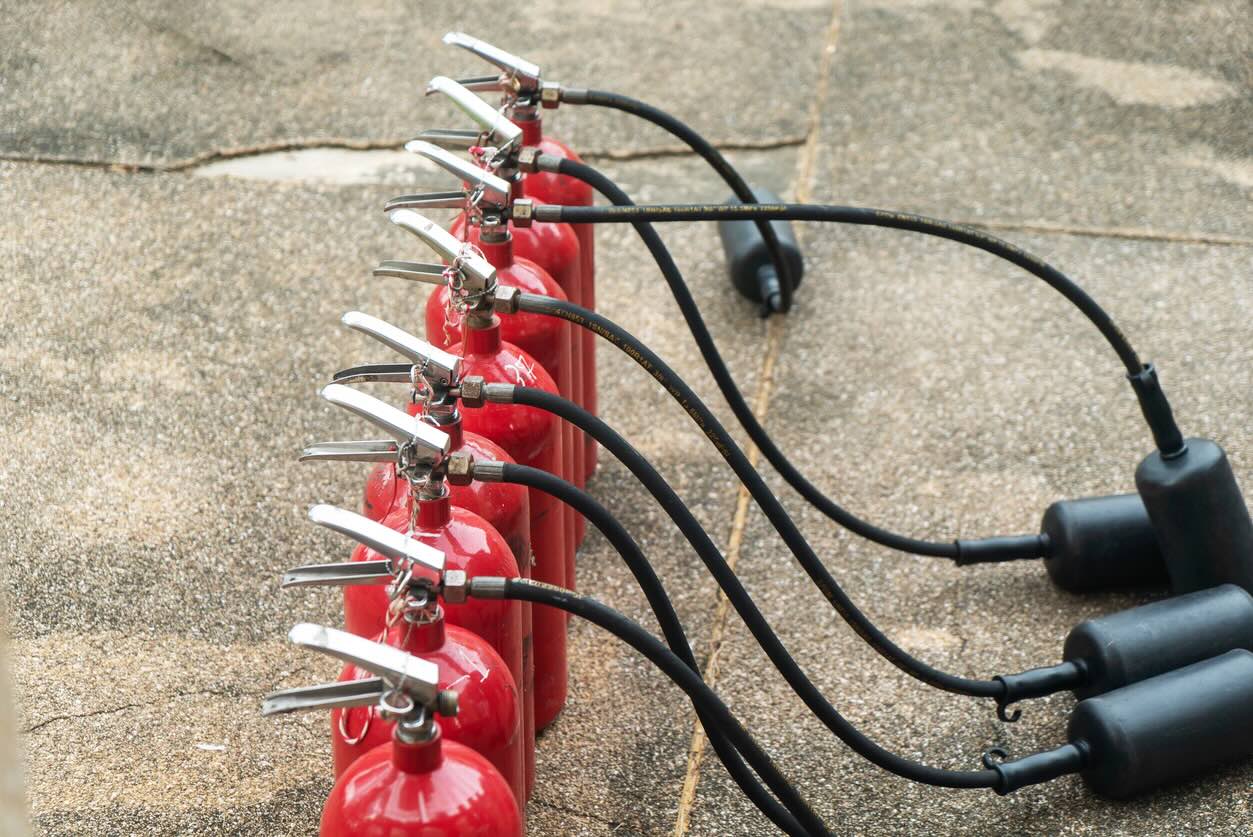
At a Glance: Fire extinguishers come in five main types: water, foam, carbon dioxide, dry chemical and wet chemical. Each of these extinguishers is designed to fight specific kinds of fires safely and effectively.
Grabbing the wrong fire extinguisher in an emergency can turn a bad situation into a disaster. Using water on an electrical fire can electrocute you, while spraying a water extinguisher on a grease fire can cause flames to spread rapidly across your kitchen. Knowing about the different types and how they are used could be life-saving.
Different fire extinguishers are used to address the five main fire classes: Class A, Class B, Class C, Class D, and Class K. Understanding what materials each type is designed to fight and how to pick the right extinguisher for different locations can help you find the exact one you need for your home, workplace, or vehicle.

Understanding Fire Classes and Why They Matter
Not all fires are the same, and neither are the methods you need to put them out. The fire safety industry categorizes fires into five distinct classes based on what’s burning. Each class burns differently and responds to different suppressors. When you understand these classifications, you can choose the right extinguisher and act fast when seconds count.
The Five Fire Classes
- Class A Fires: Involve ordinary combustibles like wood, paper, cloth, and most plastics. These are the fires you’ll find in trash cans, furniture, or cardboard boxes. They leave behind ash and can be extinguished with water or foam.
- Class B Fires: Burn flammable liquids such as gasoline, oil, grease, and paint. These fires spread quickly across liquid surfaces and won’t respond well to water. You need to smother them or interrupt the chemical reaction.
- Class C Fires: Involve energized electrical equipment, including appliances, wiring, and circuit breakers. The electricity itself doesn’t burn, but it ignites surrounding materials and creates shock hazards for anyone trying to fight the fire.
- Class D Fires: These fires are rare but dangerous, involving combustible metals like magnesium, titanium, and sodium. These typically occur in manufacturing or laboratory settings where these metals are processed or stored.
- Class K Fires: These happen in kitchens where cooking oils, animal fats, and vegetable fats reach high temperatures. These fires burn hotter than regular grease fires and require specialized suppression agents.
Why Extinguishers Should Be Matched to the Fire Class
Picking the right fire extinguisher depends on what materials you’re protecting and what fires are most likely to start in your space.
- Class A fires need cooling agents that lower the temperature below the ignition point.
- Class B fires require oxygen deprivation or chain-breaking chemicals that stop combustion.
- Electrical fires demand non-conductive agents that won’t electrocute you or damage equipment.
Using the wrong extinguisher can create real danger, so it’s important to be aware of the needs of your environment.
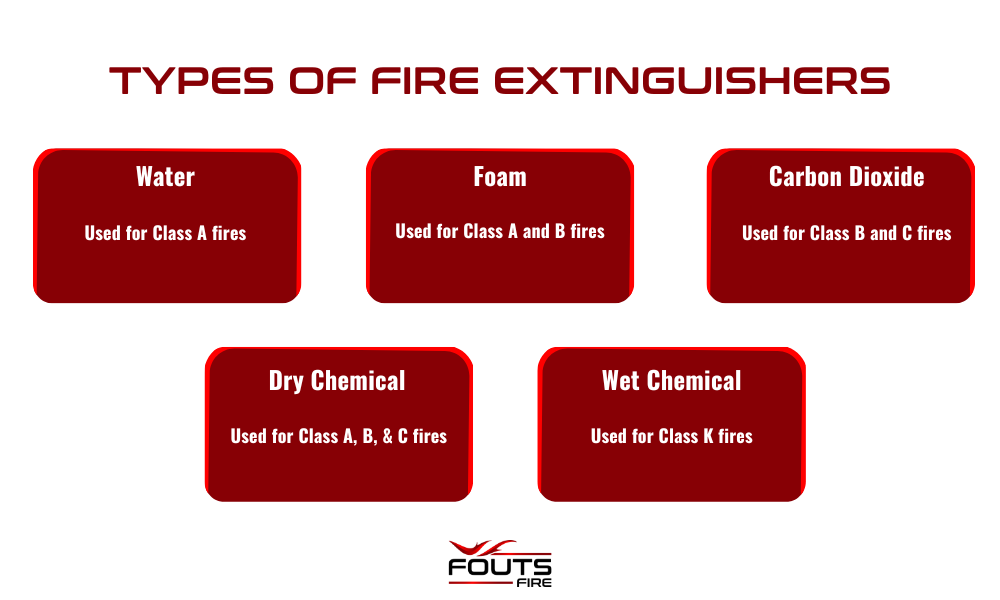
The Five Main Types of Fire Extinguishers
Understanding which fire extinguisher to grab in an emergency can mean the difference between stopping a small fire and watching it spread. Each type works differently and targets specific fire classes, so knowing your options matters.
Water Extinguishers (Class A)
Water extinguishers are the most straightforward option for common combustible materials like wood, paper, and fabric. They use water as the primary agent to cool burning materials and stop the fire from spreading. They are most often found in offices, warehouses, and residential buildings.
Never use water extinguishers on electrical fires or grease fires. Water conducts electricity, which creates a shock hazard, and it will actually spread burning oil or grease rather than putting it out.
Foam Extinguishers (Class A and B)
Foam extinguishers use aqueous film-forming foam (AFFF) or film-forming fluoroprotein (FFFP) to tackle both solid combustibles and flammable liquid fires. The foam creates a blanket over the fire that cuts off oxygen supply while also cooling the fuel source, creating a dual action that’s more versatile than water-only models.These extinguishers handle wood, paper, and fabric fires just like water types, but they also work on flammable liquids like gasoline, oil, and paint.
They are popular in garages, workshops, and industrial settings where both fire types might occur. However, foam extinguishers cannot be stored or used in freezing conditions because the foam agent will freeze and become useless.
Carbon Dioxide (CO2) Extinguishers (Class B and C)
CO2 extinguishers work by suffocating fires rather than cooling them. When you discharge one, it releases carbon dioxide gas that displaces oxygen around the fire and leaves no residue. They’re CO2 extinguishers on electrical equipment fires and flammable liquid fires. They’re standard in server rooms, laboratories, and anywhere with expensive electronics.
CO2 extinguishers have a shorter effective range than other types, so they’re not recommended for outdoor use where wind can blow the gas away before it does its job.
Dry Chemical Extinguishers (ABC or BC rated)
Dry chemical extinguishers are stocked by many homes and businesses because they handle multiple fire classes. They work by releasing a fine powder that interrupts the chemical reaction happening in the fire, stopping it at a molecular level.
Multipurpose ABC models tackle ordinary combustibles, flammable liquids, and electrical fires. BC-only models skip the ordinary combustibles and focus on liquids and electrical equipment.
While they’re incredibly effective and versatile, the powder they leave behind requires thorough cleanup. It can corrode metal and damage electronics if not cleaned up quickly during post-fire maintenance.
Wet Chemical Extinguishers (Class A and K)
Wet chemical extinguishers are specifically engineered for commercial kitchen fires involving cooking oils and fats. They spray a fine mist of potassium-based solution that creates a soapy foam barrier between the fuel and oxygen. This barrier prevents re-ignition, which is a serious risk with hot cooking oils that can reignite even after the flames are out. They also function as a coolant on Class A fires.
Specialized Extinguishers
Some fires need specialized extinguishers because standard types will make the fire worse.
Dry Powder
Class D fires involve combustible metals like magnesium, titanium, and sodium. These metals burn at extremely high temperatures and react violently with water. Dry powder extinguishers designed for Class D fires use specialized agents that smother the metal fire without causing a dangerous reaction.
Halon
Halon extinguishers and halon alternative clean agents work like CO2 by interrupting the fire’s chemical reaction without leaving residue. You’ll rarely need these specialized types unless you work in manufacturing, laboratories, or facilities with unique fire risks.

Using Fire Extinguishers Safely and Effectively
Having the right extinguisher on hand won’t help if you don’t know the proper technique or ignore basic safety rules. Using a fire extinguisher can mean the difference between stopping a small fire and making a dangerous situation worse.
The P.A.S.S. Technique
With the P.A.S.S. technique, each extinguisher operates using the same four-step method.
- Pull the pin at the top of the extinguisher to break the tamper seal.
- Aim the nozzle or hose directly at the base of the fire, not at the flames themselves.
- Squeeze the handle slowly and evenly to release the extinguishing agent.
- Sweep the nozzle from side to side at the base of the fire until it appears to be out. This sweeping motion covers the fuel source and prevents re-ignition.
Remember that once you discharge an extinguisher for practice, you need to replace or recharge it immediately. A used extinguisher won’t work when you need it.
Before You Attempt to Fight a Fire
- Never try to fight a fire without calling 911 first. Even if you think you can handle it, professional firefighters need to be on their way.
- Is the fire small and contained to one item or area? If yes, proceed. If not, get out right away.
- Always position yourself between the fire and your exit route so you can back away if needed.
When Not to Use a Fire Extinguisher
Some situations call for immediate evacuation. Leave immediately if-
- The fire is spreading to multiple areas or growing faster than you can spray
- Smoke has filled the room to the point where you’re coughing or can’t see clearly
- Your extinguisher runs empty or the fire grows larger instead of smaller
- If the fire is between you and the only exit, forget the extinguisher and find another way out
- If you have any doubt about which type of extinguisher to use on the fire in front of you. Using the wrong type can be hazardous.
Picking the Right Extinguisher
Choosing the right fire extinguisher isn’t complicated once you understand the basics. Water extinguishers handle ordinary combustibles, foam tackles both solids and flammable liquids, CO2 works for electrical fires, dry chemical powders cover multiple fire classes, and wet chemical extinguishers are built specifically for kitchen grease fires.
Find Firefighting Solutions with a Fouts Fire Apparatus
If you’re looking for professional guidance on fire safety vehicles for your fire department, Fouts Fire offers high-quality expert fire apparatus models that serve departments across the country. Find a Dealer near you today to discuss your fire protection needs and get the right equipment in place.