
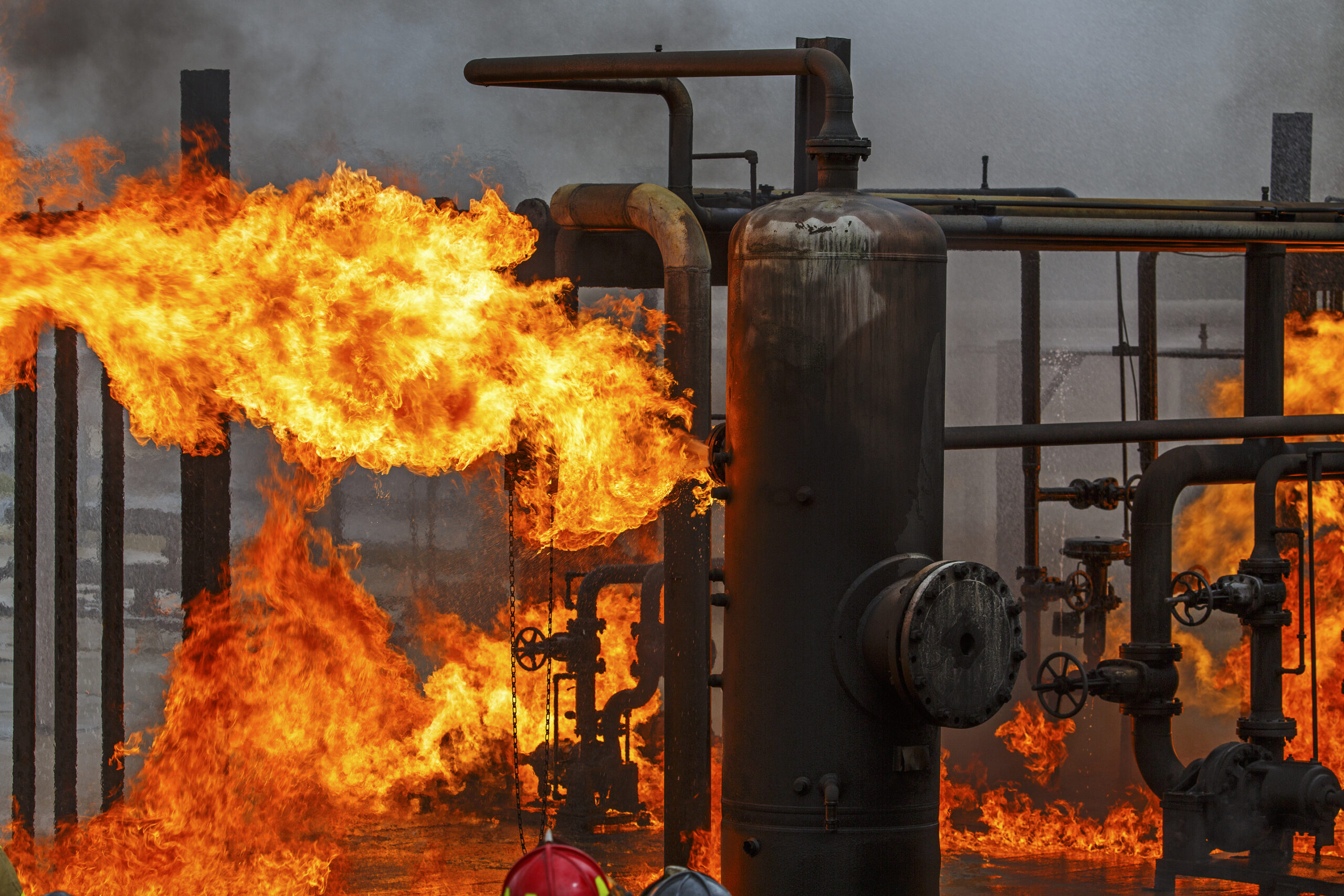
At a Glance: Class B fires occur when flammable liquids or flammable gases like gasoline, oil, paint, or propane become ignited. These fires spread rapidly and require specialized firefighting techniques using foam, dry chemical powder, or carbon dioxide extinguishing agents since water can actually cause the fuel source to spread further.
When a firefighter walks into industrial settings, repair shops, or fuel storage areas, they must be ready for Class B fire scenarios. These fires involve flammable and combustible liquids and gases. Since these substances quickly flow and spread, they can be very challenging to contain. To put out a class B fire, a firefighter needs specific tactical approaches and suppression methods.
For fire crews responding to these incidents, understanding the behavior of liquid and gas fires can mean the difference between a successful operation and a disaster. The way these fuels pool, flow, and vaporize creates unique fire dynamics that affect everything from approach angles to correct extinguisher choice. Understanding how Class B fires develop helps fire departments anticipate potential fire scenarios and position crews, select equipment, and execute firefighting strategies that can effectively handle them.
Understanding Class B Fires
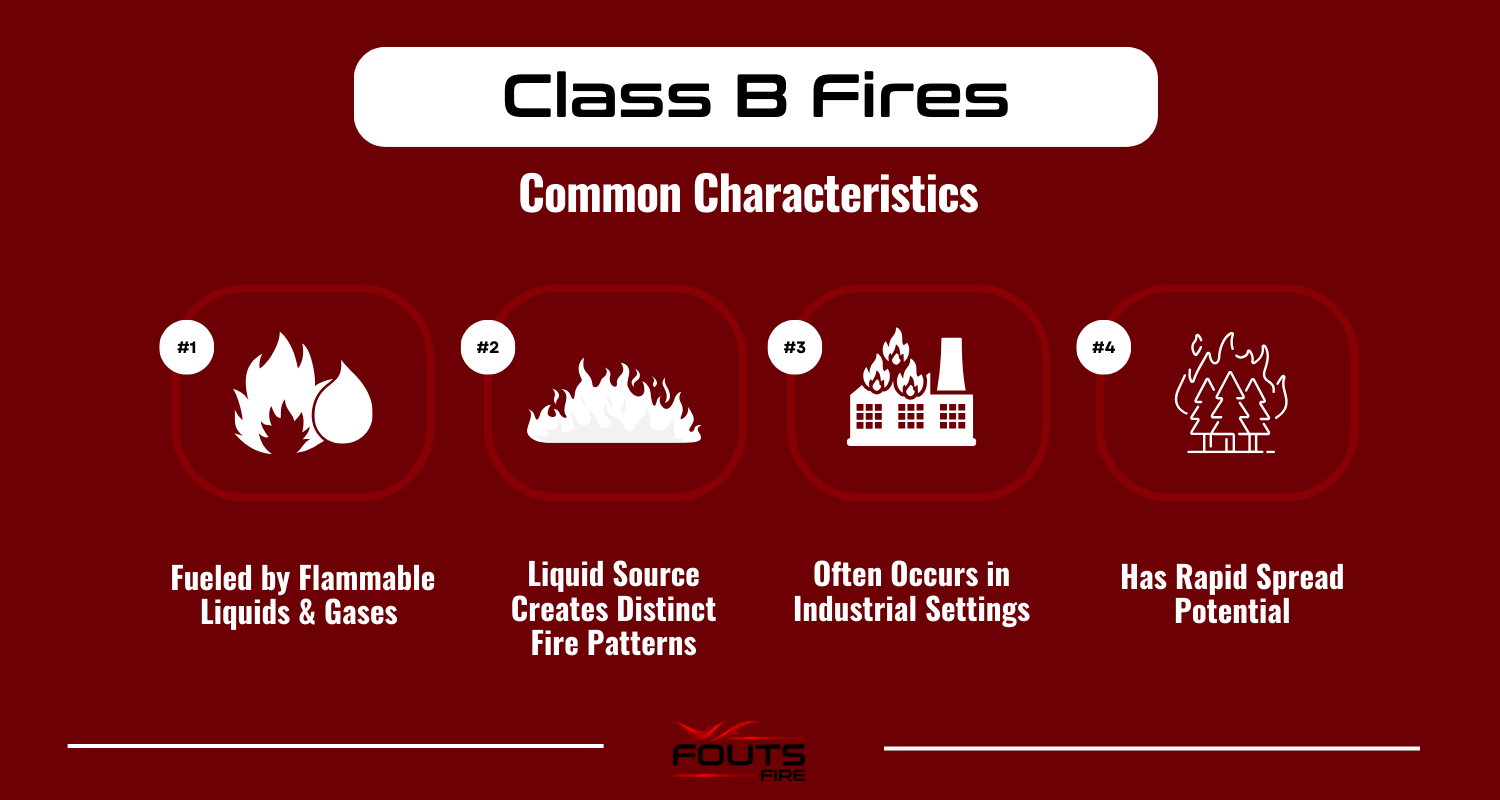
Class B fires involve flammable liquids and flammable gases, presenting unique challenges for firefighters. These class B fires commonly occur in industrial settings, vehicle accidents, and fuel storage facilities.
Common Fuel Sources
Flammable liquids involved in Class B fires include gasoline, diesel, oil-based paints, and petroleum greases. Combustible liquids and gases like propane, butane, and natural gas also serve as fuel sources. Many of these substances are present in everyday operations, from maintenance shops to manufacturing plants.
Fire Behavior and Vapor Zones
Class B fire behavior exhibits distinct patterns due to the liquid nature of their fuel sources. When exposed to an ignition source, these substances create a vapor zone above the liquid surface where the actual burning occurs. The fire spreads across the surface of the liquid, following spills or containment breaks. Temperature variations can affect vapor production rates, potentially increasing fire intensity.
Flash Point Considerations
Each flammable liquid has a specific flash point – the temperature at which it releases enough vapors to ignite when exposed to an open flame. Lower flash point liquids, like gasoline, pose higher fire hazards as they can ignite at normal ambient temperatures. Higher flash point materials, such as some oils, require more heat before becoming dangerous.
The rapid spread potential of these fires, combined with their intense heat output, makes them particularly challenging. Surface-level flames can quickly expand across spilled areas, while the vapor zones create risks for flashback and re-ignition. This combination demands specific firefighting tactics and careful approach considerations.

Common Causes and Risk Factors
Class B fires frequently occur in industrial settings where flammable liquids and flammable gases are part of daily operations. These fires often start during the handling of fuel sources like drums, chemical containers, or waste oil tanks.
Industrial Operations
Processing facilities face heightened risks of Class B fires when transferring flammable liquids between containers or during maintenance of equipment containing residual fuel sources.
Transportation Incidents
Tank trucks carrying gasoline, diesel, or other combustible liquids can develop leaks or experience accidents that release flammable materials. Loading docks and fuel transfer stations are particularly vulnerable during connection and disconnection procedures.
Workplace Hazards
Activities like welding near flammable liquid storage, cleaning parts with solvents, or repairing fuel lines all present ignition sources. Fuel transfer activities require proper storage attention to prevent spills and vapor accumulation, whether it’s at a small auto repair shop or a large industrial facility.
Environmental Conditions
Extreme heat increases vapor production from flammable liquids, creating explosive atmospheres in confined spaces. Poor ventilation allows these vapors to concentrate to dangerous levels, especially in basement areas or enclosed storage rooms.
Regular inspection of storage areas, proper ventilation systems, and grounding procedures for liquid transfers form the foundation of a solid prevention strategy.
Prevention and Safety Measures
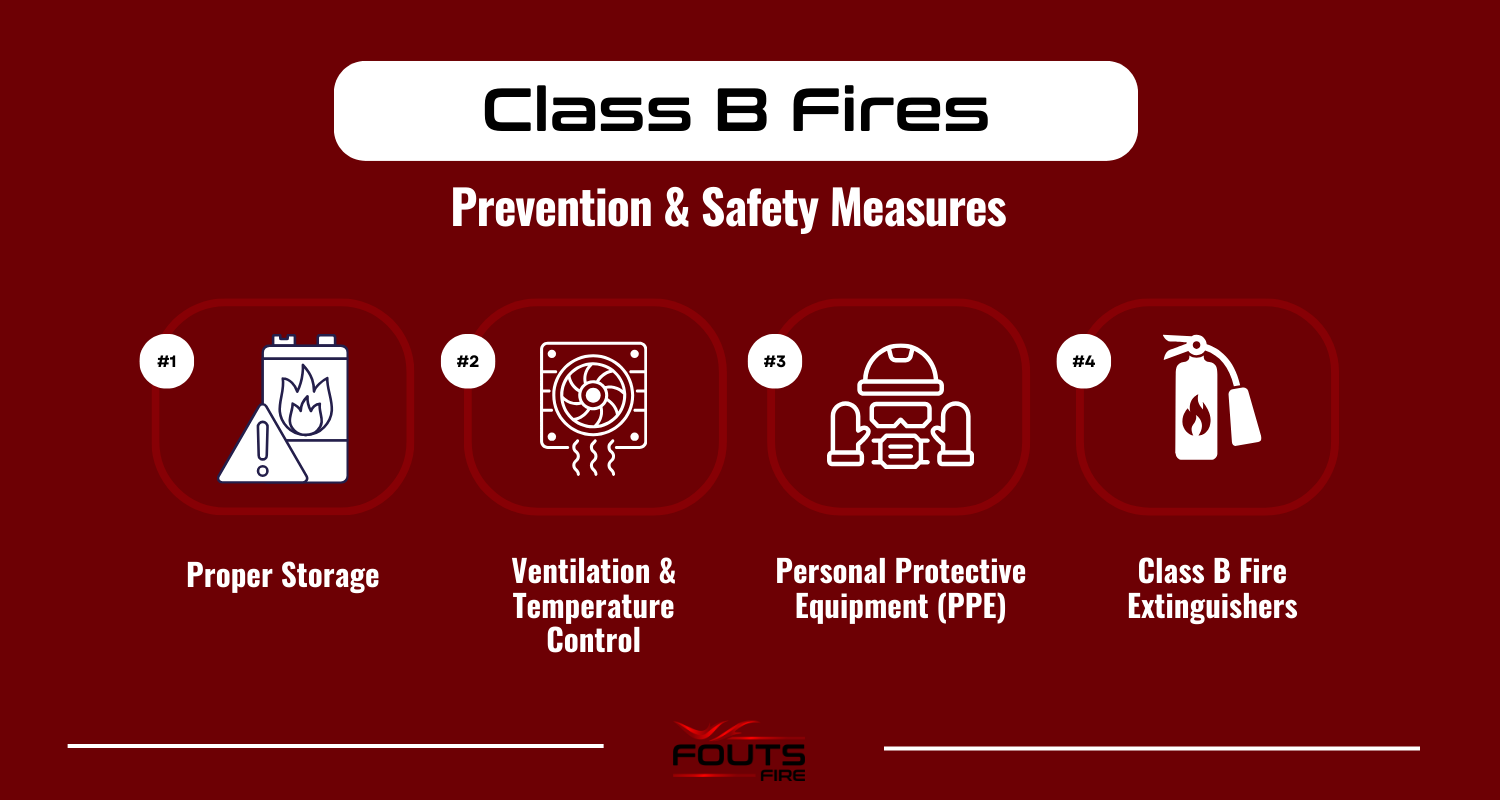
Proper Storage
Store flammable liquids and flammable gases in approved safety cans or cabinets designed specifically for combustible liquids. These containers should be metal, self-closing, and equipped with flame arresters. For larger quantities, use approved flammable storage cabinets marked with “Flammable—Keep Fire Away” signs.
Ventilation
Install mechanical ventilation systems that can provide at least six air changes per hour in storage areas. Keep storage temperatures below 120°F (49°C) to prevent extreme heat through climate control or proper building insulation. Avoid storing flammable liquids near ignition sources or in direct sunlight.
Transfer Protocols
When handling flammable liquids, use approved pumps or self-closing faucets for transferring liquids between containers. Never pour freely, as this can create static electricity. Set up designated transfer areas away from open flame and electrical sources.
Personal Protective Equipment (PPE)
These include chemical-resistant gloves, splash-proof goggles, and flame-resistant clothing when handling larger quantities. Face shields provide additional protection during transfer operations. Work boots should have non-slip soles and be resistant to chemical reaction.
In areas where the risk of Class B fires is high, a Class B fire extinguisher should be accessible. These extinguishers create a foam wall to separate the fuel source from the oxygen supply and put out the fire.
Static Shock Prevention
Static electricity poses a constant fire hazard – something as simple as flowing liquid through a pipe or removing synthetic clothing can generate enough static charge to ignite flammable vapors. Static shock can be prevented by-
- Installing proper grounding and bonding systems in storage and handling areas.
- Using grounding straps when transferring liquids between metal containers.
- Making sure metal containers make direct contact with grounded surfaces during transfers.
- Using special handling procedures with plastic containers since most of them can’t be grounded effectively.
Prepare for All Types of Fires with Fouts Fire
Being ready for Class B fires requires proper planning, training, and equipment. Regular drills with foam systems and dry chemical extinguishers help crews maintain readiness for flammable liquid and fuel source emergencies. Having standardized response protocols, maintaining updated pre-incident plans for high-risk facilities, and conducting thorough post-incident analysis all contribute to improved outcomes.
For fire departments facing unique challenges with Class B fire scenarios, having the right apparatus and equipment is critical. Fouts Fire offers a variety of fire apparatus models that can provide the firefighting solution your station needs. Our expert team works directly with departments around the country to evaluate needs and recommend the best apparatus option.
Don’t wait for an incident to expose gaps in your Class B fire response capabilities. Find a Fouts Fire dealer near you to discover how our proven fire apparatus solutions can strengthen your emergency preparedness. Learn more about our complete line of fire trucks and specialty vehicles.