
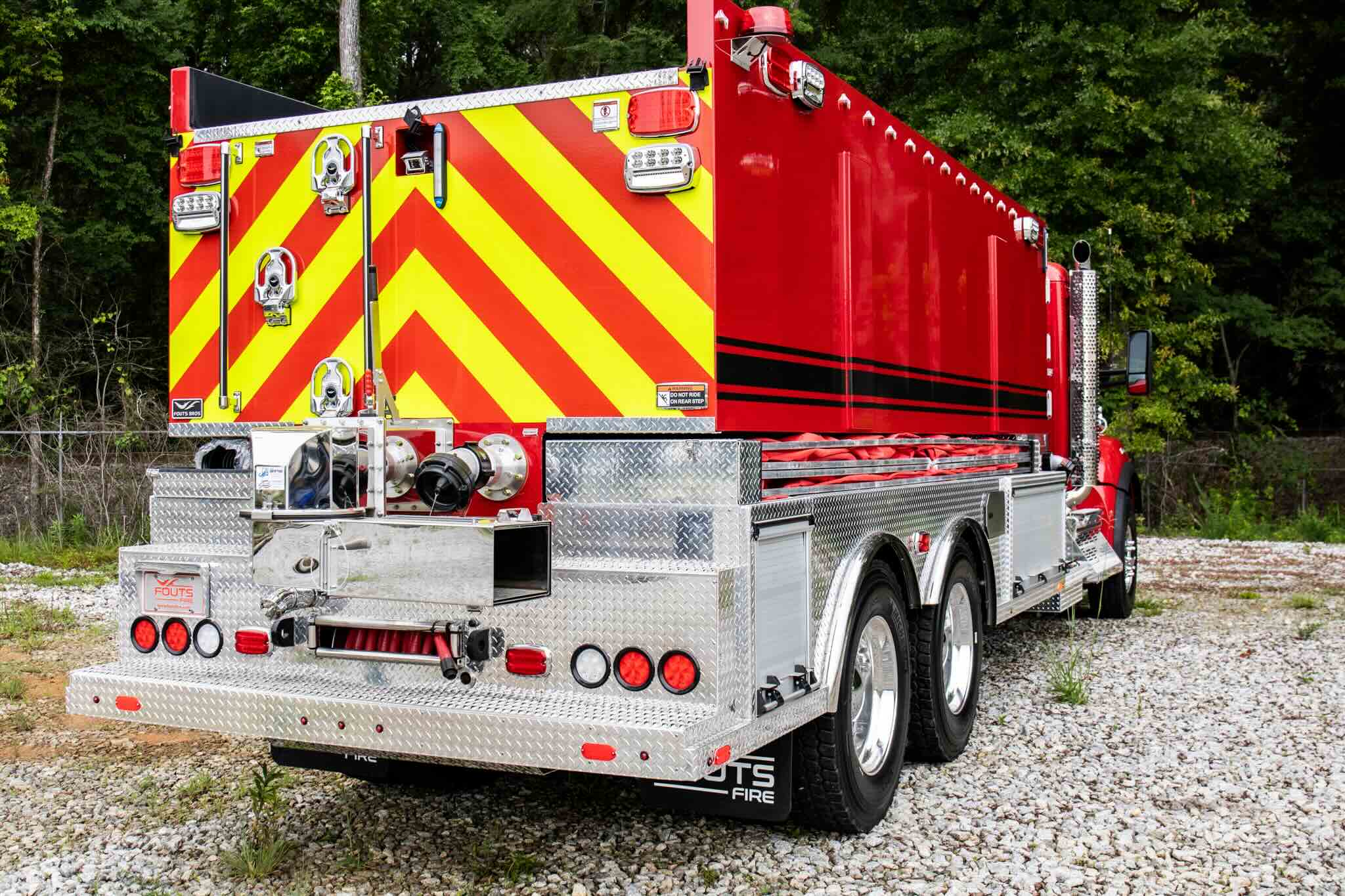
At a Glance: A fire tender is a vehicle specifically designed for firefighting operations, with different types built for specific roles and environments. Common types include water tenders (tankers) for consistent water supply, wildland fire tenders for off-road firefighting, and foam tenders for flammable liquid fires.
Fire departments rely on specialized vehicles designed to handle a wide range of emergency situations. From structure fires in urban neighborhoods to wildland blazes in remote areas, the success of a response often depends on having the right apparatus on scene. One broad category that covers many of these vehicles is the fire tender.
The term “fire tender” can refer to multiple types of firefighting apparatus, each built for a specific role. Some fire tenders focus on water supply in rural areas, while others assist with specialized hazards like aircraft fires or hazardous materials incidents. Understanding the different types of fire tenders helps firefighters and departments successfully execute modern fire operations.
What Is a Fire Tender?
A fire tender is a vehicle specifically designed for fighting fires. Depending on function, fire tenders may also be referred to as fire apparatus, fire trucks, or fire engines.
At their core, fire tenders are built to transport firefighters, carry water or other firefighting agents, and deliver firefighting equipment to emergency scenes. The exact configuration of a fire tender depends on several factors, including local hazards, terrain, water availability, and department resources.
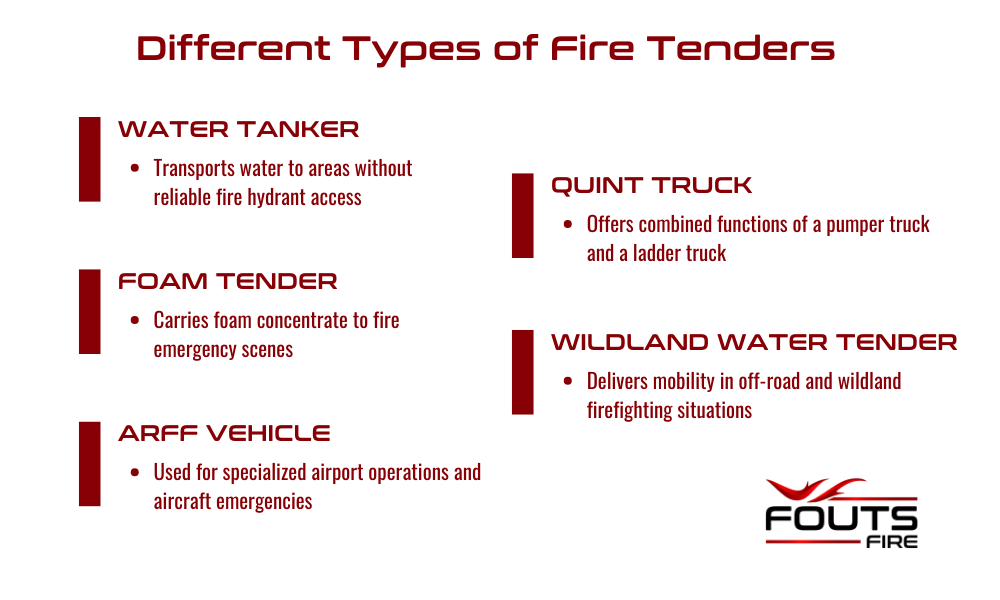
Water Tenders (Tankers)
Water tenders, often called tankers, are designed to transport large volumes of water to fire scenes where hydrants are unavailable or insufficient. They are a critical component of rural firefighting operations, where access to municipal water systems may be limited or nonexistent.
Instead of attacking the fire directly, water tenders typically support pumper trucks by delivering water that can be transferred into portable tanks or directly into another apparatus. This allows firefighters to maintain a continuous water supply during extended operations.
Key Features
Water tenders have a large hauling capacity and robust water delivery systems. Common features include:
- Water tank capacity ranging from 1,000 to 4,000 gallons
- Water pumps for drafting water from static sources and offloading water on scene
- Portable dump tanks that can be rapidly deployed
- Quick-dump valves for fast water transfer
These fire tender specifications allow water tenders to efficiently move large amounts of water over long distances.
Common Uses
Water tenders are most often used for:
- Rural and volunteer fire department responses
- Structure fires outside hydrant coverage
- Calls to areas with limited water infrastructure
- Long-duration incidents requiring sustained water supply
Types of Water Tenders
Water tenders are available in a range of capacities to meet different operational needs, including:
- 2000 Gallon Tanker: Carries up to 2,000 gallons of water
- 2000 Gallon CJ Series Water Tender: Features a shortened wheelbase and a modified rear bumper
- 3000 Gallon Tanker: Carries up to 3,000 gallons of water
- 3000 Gallon CJ Series Water Tender: Features a compact wheelbase and a reduced pump panel
- 4000 Gallon Tanker: Carries up to 4,000 gallons of water
Each option balances capacity, maneuverability, and road weight limits.
Wildland Water Tenders
Wildland water tenders are designed specifically for off-road and wildland firefighting environments. Unlike large structural apparatus, these vehicles prioritize agility and terrain capability.
These trucks are typically smaller and lighter than standard pumpers, allowing them to access narrow trails, uneven ground, and remote areas where larger fire department vehicles cannot operate effectively.
Key Features
Wildland fire tenders are built for mobility and initial attack operations. Typical features include:
- Four-wheel drive or all-wheel drive capability
- Smaller water tanks
- Pump-and-roll systems that allow water application while moving
- High ground clearance for rough terrain
- Compact vehicle footprint for tight access areas
- Specialized wildland nozzles
These features allow these trucks to fight fast-moving fires in challenging environments.
Common Uses
Wildland fire engines are frequently used for:
- Wildland and brush fires
- Grass and roadside fires
- Initial attack in remote locations
- Support for larger wildland firefighting operations
Aircraft Rescue and Firefighting (ARFF) Vehicles
Aircraft Rescue and Firefighting (ARFF) vehicles are among the most specialized fire apparatus types in use today. These vehicles have a unique design to effectively serve airport operations and aircraft emergencies, where speed and suppression power are critical.
ARFF trucks are engineered to deliver massive volumes of water, foam, and dry chemical agents in a very short amount of time, often while the vehicle is still moving toward the incident.
Key Features
ARFF vehicles are built to meet the unique demands of aviation emergencies and typically include:
- Fast acceleration and high top speeds
- Large onboard water and foam tanks
- Roof-mounted and bumper-mounted turrets
- Ability to apply firefighting agents while in motion
- Elevated driver cabs for visibility over aircraft
These fire department vehicles are designed to control fires quickly, allowing for passenger evacuation and rescue.
Common Uses
ARFF vehicles are deployed for:
- Aircraft fires and crashes
- Fuel spill fires on runways or tarmacs
- Emergency standby during aircraft incidents
- Airport emergency response operations

Quint Trucks (Quintuple Combination Pumpers)
Quint trucks are multi-purpose fire tenders that combine the functions of a pumper truck and a ladder truck into a single apparatus. The term “quint” refers to the five primary functions the vehicle performs. These versatile fire trucks are popular with departments that need maximum capability from a limited fleet.
Key Features
A standard quint includes:
- Fire pump rated at 1,000 gallons per minute or more
- Onboard water tank, typically 300–500 gallons
- Aerial ladder, usually between 50 and 75 feet
- Ground ladders
- Hose storage
This combination allows quints to perform both suppression and aerial operations.
Common Uses
Quints are commonly used by:
- Departments with limited apparatus budgets
- Smaller or suburban fire departments
- First-due companies requiring both pumping and ladder access
- Departments seeking redundancy for ladder or pumper functions
Foam Tenders
Foam tenders are specialty support units built to deliver large volumes of foam concentrate to the fireground, most often for incidents involving flammable liquids (Class B fires) or high-hazard industrial risks. Instead of functioning as the primary attack apparatus, a foam tender’s main job is to extend foam capability for engines, ladder trucks, and fixed systems. These tenders are equipped with foam proportioning systems that allow precise mixing and delivery during suppression operations.
Key Features
A foam tender often includes:
- Large foam concentrate tanks
- Multiple foam types
- Hose and large-diameter supply lines
- High-flow appliances such as portable monitors, master stream devices, and foam eductors
- Spill control and support tools
Common Uses
Foam tenders are used in areas with elevated industrial fire risk, including:
- Chemical manufacturing facilities
- Loading rack or tanker trucks
- Marine ports
- Large industrial warehouses
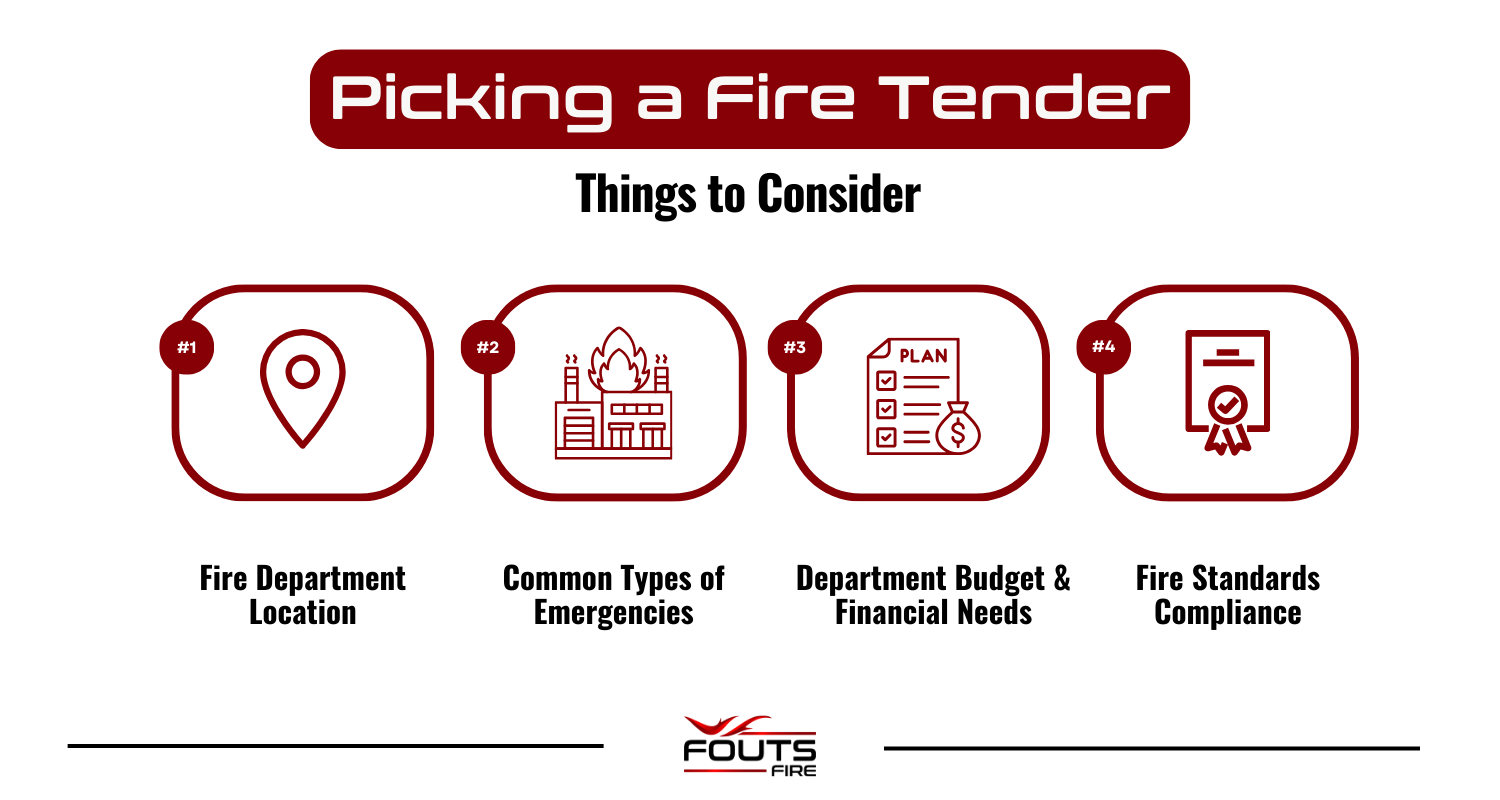
Factors That Determine Fire Tender Selection
Department Needs Assessment
Fire departments select emergency vehicles based on the types of emergencies they encounter most often. Key considerations include:
- Urban versus rural response areas
- Wildland fire risk
- Building heights and construction types
- Availability of hydrants and static water sources
Budget and Resources
Financial considerations play a significant role in apparatus selection. Departments must weigh:
- Initial purchase cost
- Long-term maintenance and operating expenses
- Training requirements for specialized vehicles
- Staffing needs for different apparatus types
Regulatory and Standards Compliance
Fire tender specifications must align with applicable standards and regulations, including:
- National Fire Protection Association (NFPA) apparatus standards
- State and local regulations
- Insurance Services Organization (ISO) rating considerations that affect insurance classifications
Discover Fire Tenders & More at Fouts Fire
Fire tenders come in many specialized forms, each designed to meet specific firefighting and rescue challenges. From water tenders supporting rural operations to wildland engines navigating rugged terrain, every fire apparatus serves a critical role. Fire departments carefully select vehicles based on local risks, geography, and available resources.
Fouts Fire is one of the leading fire apparatus manufacturers in the United States and Canada. We offer a range of models, including pumpers, tankers, and rescue vehicles. Find a Fouts Dealer near you to find the best fire apparatus for your fire department.