
At a Glance: Becoming a wildland firefighter requires completing basic firefighter training, passing a physical fitness test, and maintaining specific certifications. Wildland fire training involves both classroom education and hands-on field experience to prepare prospective candidates for the intensity of the job.
As wildfires become more frequent and intense, the need for qualified wildland firefighters continues to grow. These brave professionals face nature’s most powerful forces to protect communities, natural resources, and wildlife habitats. The career offers unique challenges and rewards, combining physical demands with technical expertise and teamwork in some of the most dramatic environments imaginable. In order to become a wildland firefighter, you must complete the required training courses, meet physical fitness standards, obtain any necessary certifications, and gain hands-on experience in the field.
Physical Requirements and Fitness Training
The Work Capacity Test serves as the foundation for wildland firefighter fitness certification. The requirements for this test vary depending on the type of position that the candidate is pursuing-
- Arduous Duty: Firefighter, faller, or crew boss candidates must be able to perform long hours of arduous work, including walking, running, jumping, and climbing.
- Moderate Duty: Candidates for moderately arduous positions, such as an operations section chief or safety officer, must be able to perform average endurance and conditioning exercises well as demonstrate complete control of their physical faculties
- Light Duty: Candidates for less intense positions, such as an incident communications technician or camp manager, must be able to perform light physical exertion in field or office settings and be in basic good health
Pack Test
Before becoming arduous-duty wildland firefighters, candidates must complete the Pack Test. This pass/fail test requires carrying a 45-pound pack over a three-mile course in 45 minutes or less on level terrain. This demanding standard ensures firefighters can handle the physical challenges of the job.
Successful wildland firefighters develop strength and endurance across multiple areas. A solid training program should include regular hill climbs, loaded pack hikes, and endurance runs. Different components of fitness should be targeted during training-
- Aerobic Fitness: This refers to the body’s ability to supply muscles with the oxygen they need to perform cardio and other high-energy activities.
- Muscular Fitness: This measures the body’s strength, muscular endurance, and flexibility. Trainees should focus on developing a strong core, powerful legs, and upper body strength for tool handling.
After successfully completing a medical exam and the pack test, candidates receive an Incident Qualification Card (also known as a “Red Card”). In addition to a baseline medical exam, which is required for new hires, wildland firefighters must undergo periodic exams every three years, with an online self-certification in non-exam years. These medical standards were established to promote the safety of wildland firefighters working in hazardous environments.
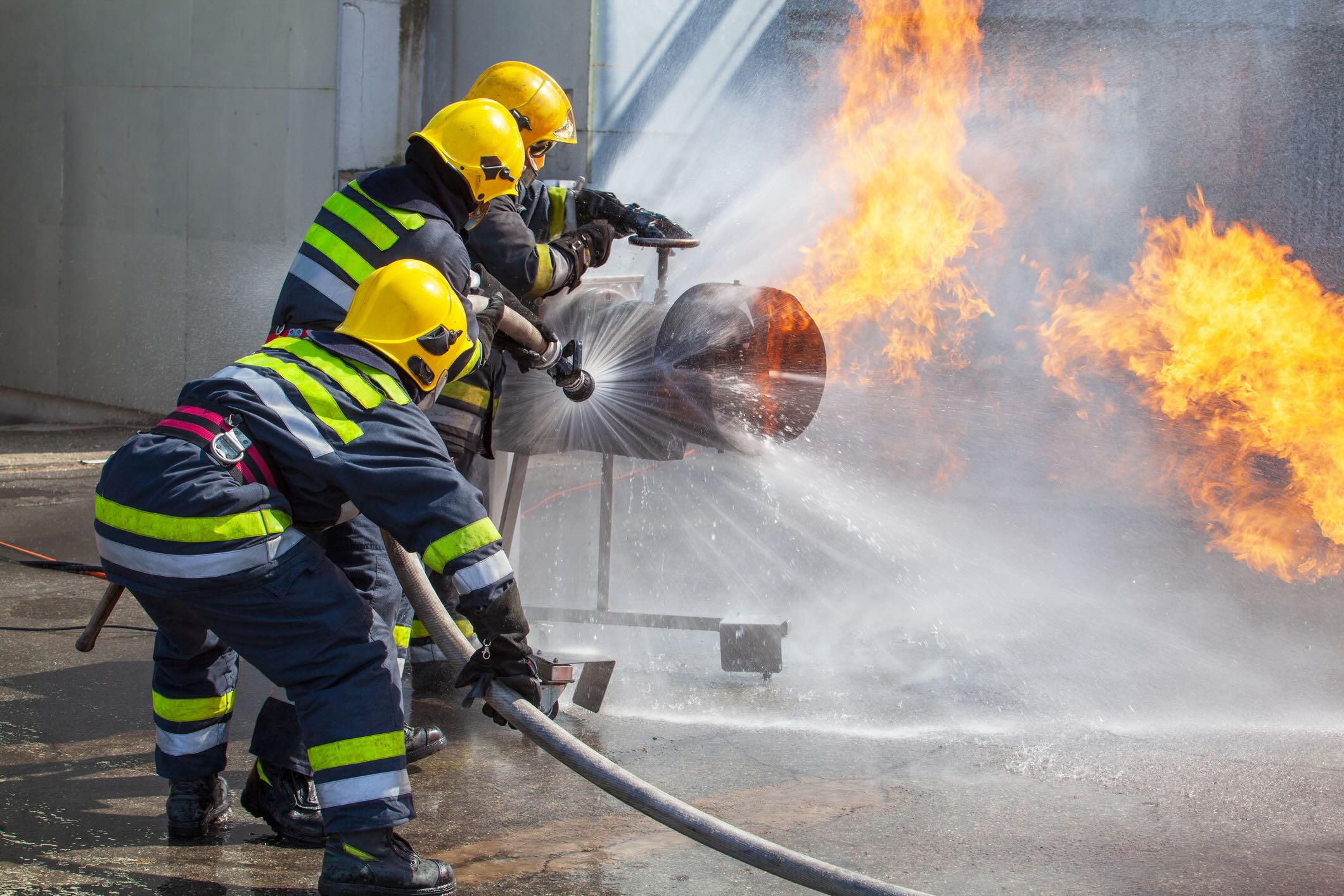
Many candidates struggle with the pack test’s time requirement and carrying heavy loads over a distance. The solution lies in progressive training – starting with lighter weights and gradually increasing both load and distance while maintaining proper form and pace. Regular practice hikes with a weighted vest or pack help build specific endurance for the test requirements.
Basic Training and Certifications
Beginning your career as a wildland firefighter starts with successfully completing several foundational training courses. The National Wildfire Coordinating Group (NWCG) establishes these requirements to prepare firefighters for the challenges they’ll face in the field.
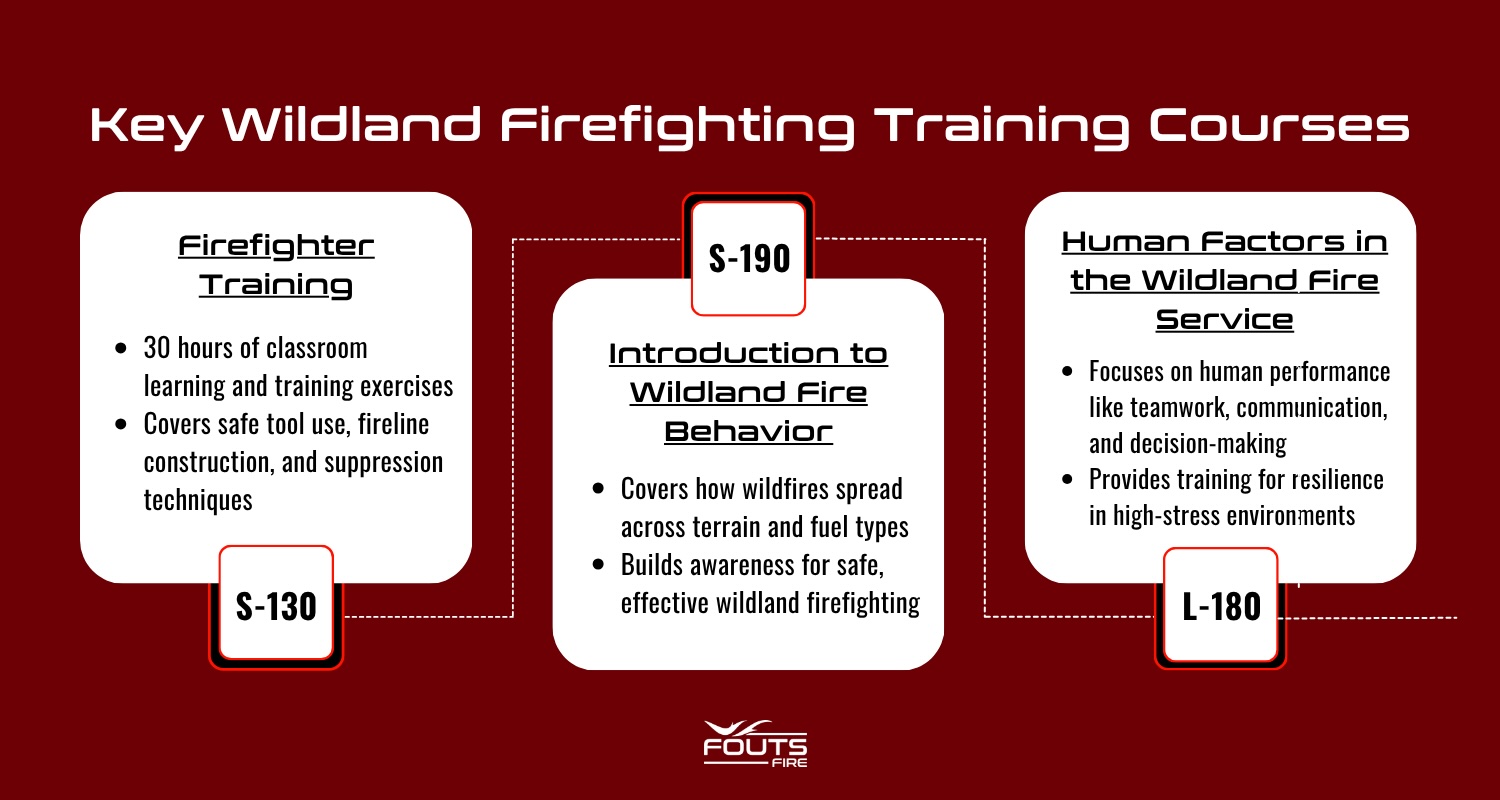
The core training package consists of three main courses.
- S-130 (Firefighter Training): This 30-hour course combines classroom learning with training exercises to teach practical firefighting skills, including tool use, fireline construction, and safety protocols
- S-190 (Introduction to Wildland Fire Behavior): This course covers how fires spread and react to weather, terrain, and fuel conditions
- L-180 (Human Factors in the Wildland Fire Service): This course focuses on communication, decision-making, and team dynamics in high-stress situations
Beyond these basics, wildland firefighters need current First Aid and CPR certification.
- ICS-100 (Introduction to Incident Command System): This course teaches firefighters how emergency response operations are organized and managed during large-scale events.
The National Fire Protection Association also offers the NFPA 1140 Standard for Wildland Fire Protection, which combines four previous NFPA standards to establish national best practices for wildland firefighting.
Most firefighter candidates complete their basic training in 1-2 weeks, though programs through some federal agencies, state forestry departments, or community colleges might last longer.
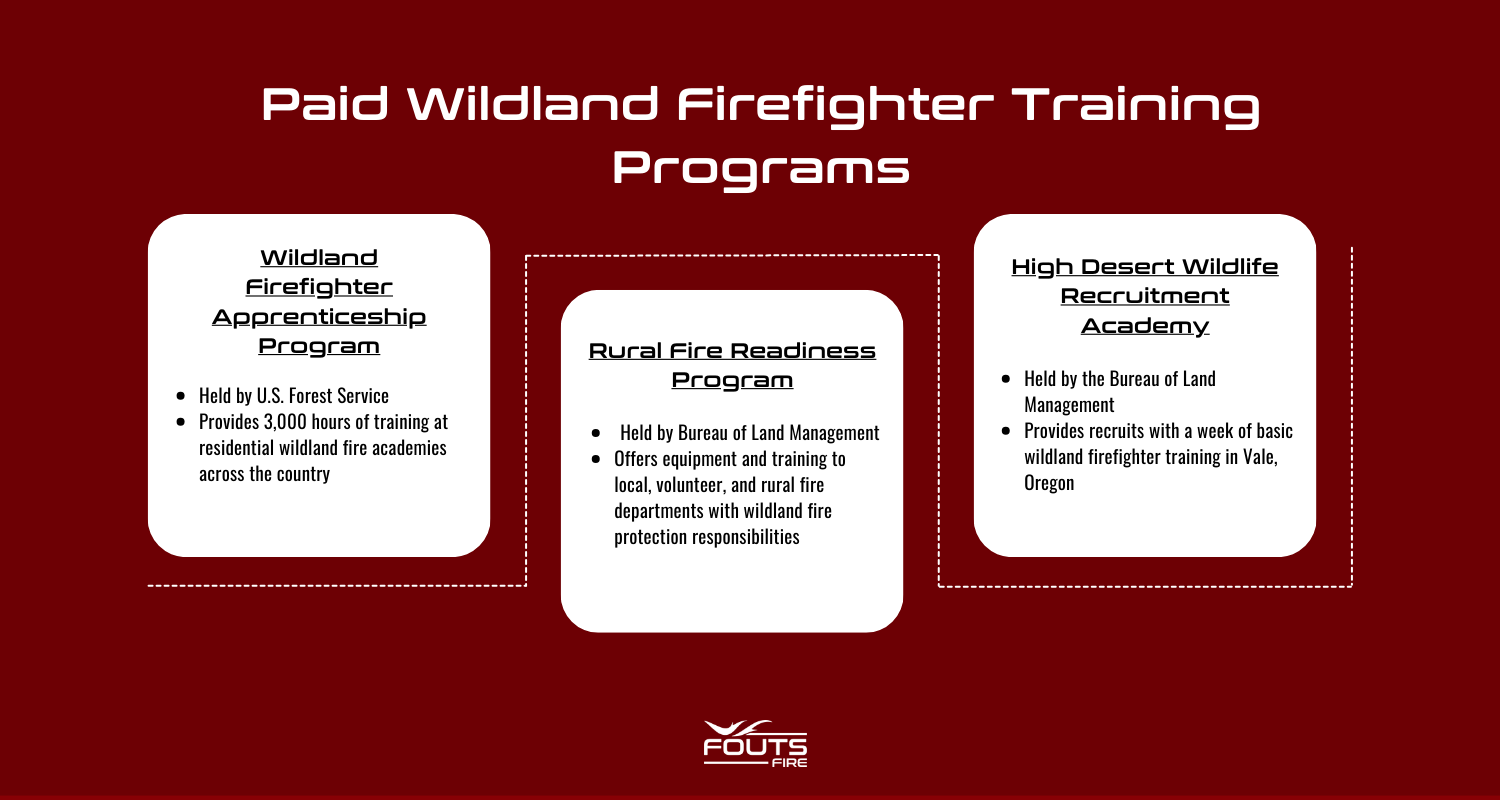
State and private training programs typically range from $250 to $2,000, covering course materials, field exercises, and certification fees. Some federal agencies offer training at no cost to eligible candidates, including:
- Wildland Firefighter Apprenticeship Program: The Forest Service covers the costs for this program, which provides 3,000 hours of training at residential wildland fire academies across the country.
- Rural Fire Readiness Program: The Bureau of Land Management provides training and equipment to local, volunteer, and rural fire departments with wildland fire protection responsibilities.
- High Desert Wildlife Recruitment Academy: This Bureau of Land Management program provides seven days of basic wildland firefighter training in Vale, Oregon
Training locations are available across the country, with higher concentrations in western states where wildland fires are more common. Many programs offer spring training sessions to prepare firefighters for the upcoming fire season, though some facilities run courses year-round.
Field Skills and Technical Knowledge
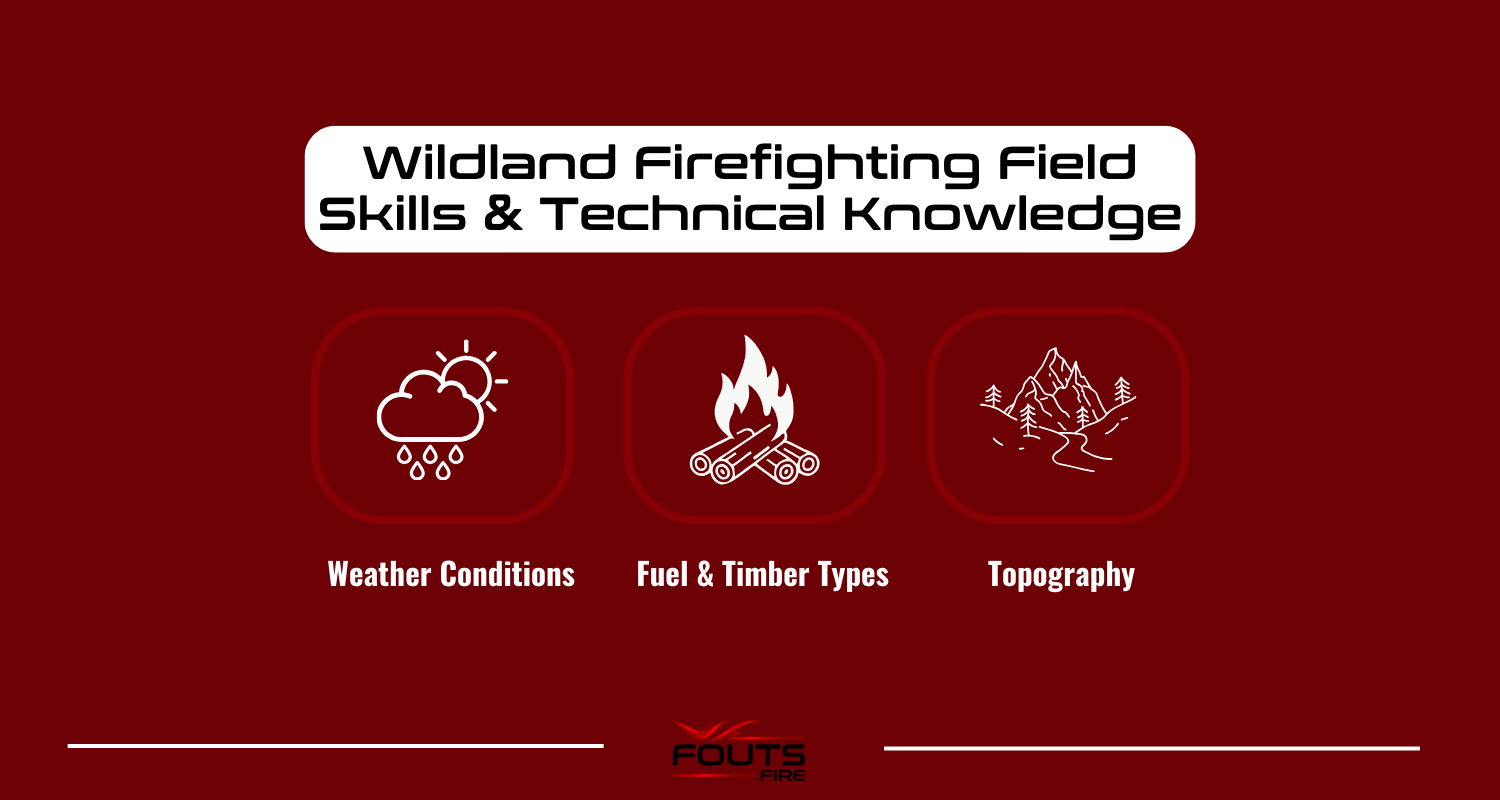
Understanding fire behavior stands as a fundamental skill for wildland firefighters. Due to its intensity, it’s especially important that firefighters have comprehensive knowledge of how environmental factors create predictable fire patterns and potential hazards. These topics are covered in wildland training courses.
Weather Conditions
These directly influence how fires spread and intensify, with wind speed and direction, temperature, and humidity playing major roles.
- Wind: As the primary driver of fire spread, changes in wind direction can rapidly alter fire movement patterns and create dangerous situations for firefighters and civilians
- Temperature: This affects fuel moisture content and combustion efficiency, with higher temperatures creating drier conditions that promote rapid fire spread. Fires typically become more active during afternoon heat and when moderating during cooler evening hours.
- Humidity: Low humidity levels dry fuels and increase fire intensity, while higher humidity can slow fire progression and reduce spotting distance.
Fuel & Timber Types
Firefighters must recognize how different fuel types and types of timber affect fire progression.
- Light Fuels: These fuels, including grass and small brush, ignite easily and burn rapidly, creating fast-moving fires that can outpace suppression efforts but typically produce lower heat intensity.
- Heavy Fuels: These fuels, including large timber and fallen logs, burn longer and produce more intense heat, creating sustained fire activity that resists suppression efforts.
Topography
This shapes fire movement, with steep slopes accelerating spread rates and valleys creating dangerous fire channeling effects. Uphill fire spread occurs two to three times faster than downhill movement due to preheating effects, where rising heat and flames dry fuels above the fire front. This creates particularly hazardous conditions on steep terrain where fires can rapidly accelerate and overwhelm suppression efforts.
Equipment Mastery
- Hand Tools: These can include Pulaskis, fire rakes, and shovels require proper technique for both effectiveness and safety.
- Power Equipment: These can include chainsaws and water pumps, which demand careful maintenance and skilled operation.
- Personal Protective Equipment (PPE): Fire-resistant clothing, helmets, gloves, and boots must properly fit and be regularly inspected.
Clear Communication
Firefighting teams rely on consistent updates about fire conditions, weather changes, and tactical adjustments, which can mean the difference between life and death during a wildland fire. To keep operations running smoothly during high-stress situations, the National Wildfire Coordinating Group emphasizes the Five Communications Responsibilities–
- Brief
- Debrief
- Acknowledge & Understand Messages
- Communicate Hazards to Others
- Ask If You Don’t Know
Navigation Expertise
Firefighters practice navigation skills regularly, often in low-visibility conditions that mirror actual fire scenarios.
- Map: Accurate map-reading skills help teams identify escape routes and safety zones and work effectively in remote terrain
- GPS: These devices provide precise location data and help coordinate resources across large fire scenes
- Compass: Traditional compass navigation serves as a reliable backup when technology fails
Next Steps for Prospective Wildland Firefighters
The wildland firefighting field continues to expand, with increasing demand for qualified professionals across federal, state, and local agencies. Starting your journey as a wildland firefighter requires:
- Completing basic firefighter training
- Obtaining necessary certifications like the Incident Qualification Card (Red Card)
- Maintaining physical fitness standards
Beyond these fundamentals, continuing fire education through specialized courses will open doors to career growth. For more information, contact your local fire department or visit the National Wildfire Coordinating Group’s website.
Find the Right Apparatus at Fouts Fire
Fouts Fire provides fire departments with top-quality firefighting vehicles and equipment. Our apparatus lineup includes pumper trucks, commercial pumpers, and rescue apparatus engineered with reliable performance systems and advanced features that allow firefighters to effectively respond to many different emergency situations. Find a Dealer to learn how we can support your fire department’s mission.