

The Short Answer: Wildland firefighters require specialized protective equipment, including fire-resistant clothing, boots, helmets and gloves. This equipment must meet NFPA standards and includes both personal protective equipment (PPE) and hand tools necessary for wildland firefighting operations.
Fighting wildfires demands proper wildland firefighter gear that stands between firefighters and extreme conditions. The National Fire Protection Association (NFPA) sets strict standards for wildland fire gear, covering everything from fire-resistant material to specialized tools. This equipment serves multiple purposes – protecting against extreme heat, flying embers and smoke while allowing firefighters to work effectively in rough terrain.
Modern wildland firefighting gear falls into three main categories: protective equipment, hand tools and support gear. Each piece plays a specific role in keeping wildland firefighters safe and capable during extended operations in remote areas. From fire-resistant shirts to specialized boots designed for rough terrain, every component must work together as an integrated system.
Personal Protective Equipment (PPE) Basics
Wildland firefighters rely on specialized protective equipment that shields them from extreme heat, flames and environmental hazards. Their firefighter gear follows strict National Fire Protection Association guidelines to maintain safety standards across all wildland firefighting operations.
Fire-Resistant Clothing
Wildland firefighters wear Nomex or other approved fire-resistant materials as their primary defense against heat and flames. The protective clothing system consists of three main layers:
- Base layer: Moisture-wicking material
- Middle layer: Insulating protection
- Outer shell: Primary protective barrier
These garments must fit properly—not too loose to catch on branches or too tight to restrict movement. Regular inspection for tears, worn spots, or contamination helps maintain the gear’s protective properties.
Head Protection
A wildland firefighting helmet meets specific impact and thermal protection requirements. Modern wildland firefighter gear incorporates a hard outer shell, an impact-absorbing liner and an adjustable suspension system. Attachments include a chin strap, goggles or safety glasses and a shroud that protects the neck and ears from heat and embers.
Footwear Standards
Wildland fire boots feature leather construction with a minimum 8-inch height and non-slip, heat-resistant soles. Key requirements include:
- Leather uppers with steel toe protection
- Proper ankle support and stability
- Specific lacing techniques to prevent loose laces
- Daily cleaning and regular conditioning for extended boot life
Hand Protection
Firefighters use two main types of gloves: all-leather work gloves for general operations and specialized firefighting equipment for direct fire contact. Both types must provide heat protection while maintaining enough dexterity for hand tools. Gloves need replacement when they show signs of wear, including holes, thinning leather, or damaged stitching.

Field Tools and Equipment for Wildland Firefighting
Wildland firefighters rely on a specific set of firefighting equipment and gear to battle wildfires effectively. These essential tools combine traditional firefighter equipment with specialized gear designed for rough terrain and extreme conditions.
Hand Tools
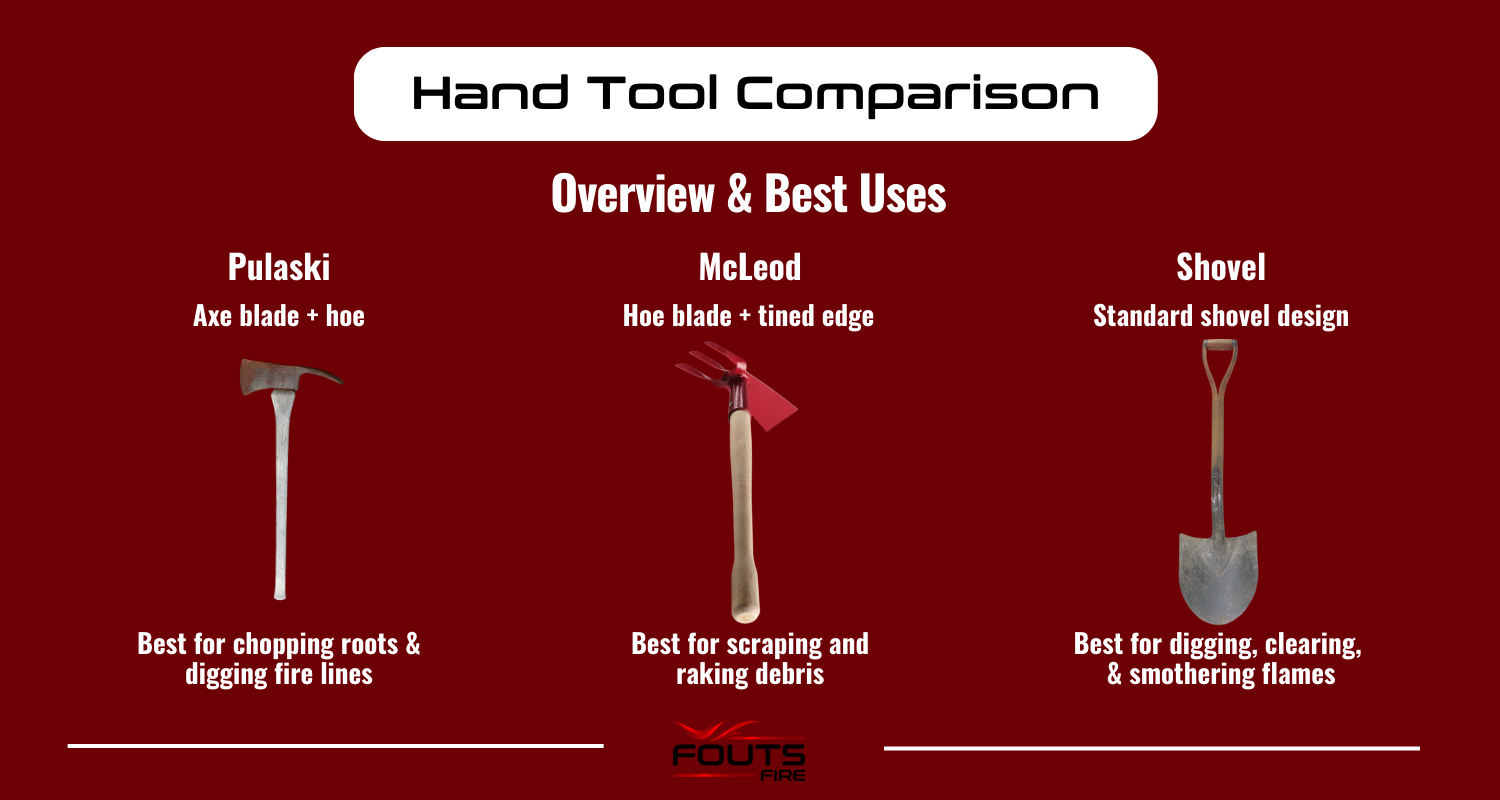
The Pulaski stands as a wildland firefighter’s most trusted tool, featuring an axe blade on one side and an adze on the other. This dual-purpose design allows firefighters to both chop through roots and dig fire lines.
The McLeod, with its wide hoe blade and tined edge, excels at scraping and raking forest debris to create fire breaks. Standard shovels round out the hand tool collection, used for digging, clearing and smothering flames with dirt.
The Shovel provides essential versatility in wildland firefighting operations. These specialized shovels feature reinforced blades and sturdy handles designed for digging fire lines, clearing debris and smothering spot fires with dirt. Firefighters rely on shovels for constructing fire breaks and controlling small flare-ups throughout extended operations.
Water Handling Equipment
- Backpack pumps (bladder bags) hold 5 gallons of water for targeting spot fires
- Hose systems include lightweight, portable segments for extended reach
- Adjustable nozzles provide control from wide spray patterns to concentrated streams
- Fouts Fire FB-94 Pumpers feature 1500 GPM pumps with 1000-gallon tanks and pump-and-roll capabilities, designed for structural and wildland firefighting operations
Communication Devices
Every wildland firefighter should carry a radio programmed with specific frequencies for team coordination. These radios feature emergency alert buttons and clear transmission capabilities. Backup systems include satellite phones for limited radio coverage areas and emergency signaling devices.
Navigation Tools
Firefighters carry waterproof topographic maps and magnetic compasses as primary navigation tools. Modern GPS devices supplement traditional navigation, providing exact coordinates and helping track fire progression. Many units now include both handheld GPS and mobile devices with specialized firefighting apps.
Tool Maintenance
Strike teams inspect all equipment daily, sharpening cutting edges and replacing worn handles. Water equipment undergoes pressure testing before each deployment. Communication devices receive regular battery checks and weather protection. Navigation tools are updated with current maps and charged before each shift.
Fire Shelter and Protective Equipment
A fire shelter serves as a wildland firefighter’s last line of defense during extreme heat. The standard-issue fire shelter consists of fire-resistant material with an outer layer of aluminum foil bonded to woven silica cloth and an inner layer of aluminum foil laminated to fiberglass cloth. Firefighters must carry their shelters in a hard case on their belt or pack, positioned for quick access within 30 seconds.
Fire Shelter Deployment
Wildland firefighters train regularly on shelter deployment, following these guidelines:
- Select a fuel-free area when possible
- Position with feet toward the oncoming fire
- Stay inside until the firefront passes
- Maintain communication with crew members
- Follow established deployment protocols
Required Safety Equipment
Every wildland firefighting gear setup includes basic protective equipment in their fire line gear:
- First aid kit with burn treatment supplies, bandages and basic medications
- Emergency signaling devices like whistles and signal mirrors
- Reliable headlamps with spare batteries for night operations or smoky conditions
Personal Gear Requirements
Hydration remains the most important part of wildland firefighting operations. Firefighters carry multiple one-liter water bottles or hydration bladders totaling at least two liters. Food storage includes high-energy snacks packed in heat-resistant containers. Weather protection gear includes a lightweight rain jacket and a warm layer for changing conditions.
Equipment Maintenance
Daily equipment checks focus on:
- Fire shelter case integrity
- First aid kit completeness
- Light sources functionality
- Water container cleanliness
- Pack and strap conditions
Firefighters replace worn items according to fire department schedules, with fire shelters requiring inspection every 14 days during fire season. Teams document all equipment checks in daily logs, noting any repairs or replacements needed.
Proper Gear Maintenance: Your Safety Depends On It
Wildland firefighting demands firefighter gear that’s inspection-ready and battle-tested. Your protective equipment creates an integrated safety system that keeps firefighters alive on the fire line. Following NFPA standards isn’t just protocol; it’s your lifeline.
Daily Care Essentials
Storage: Keep all personal protective equipment in a cool, dry place away from direct sunlight when not in use.
Cleaning: Clean wildland gear according to manufacturer specifications after each use, checking for wear and damage.
Boot care: Pay special attention to boots, replacing worn soles and conditioning leather regularly to maintain water resistance and protection.
Tool maintenance: Keep tools sharp, clean and rust-free, storing them in protective cases or sheaths between deployments.
Ready to Gear Up?
Making smart choices about your wildland firefighting gear can mean the difference between life and death in the field. At Fouts Fire, we offer complete wildland fire gear packages that meet or exceed all federal standards, plus our innovative Fouts FOUR rescue truck – everything you need for a first-out rescue response in one versatile platform.
Contact Fouts Fire today to discuss firefighting solutions tailored to your department’s specific needs and ensure you’re properly equipped for the demanding work ahead.
For detailed equipment specifications and care guidelines, consult the National Wildfire Coordinating Group’s equipment standards or your agency’s gear requirements.