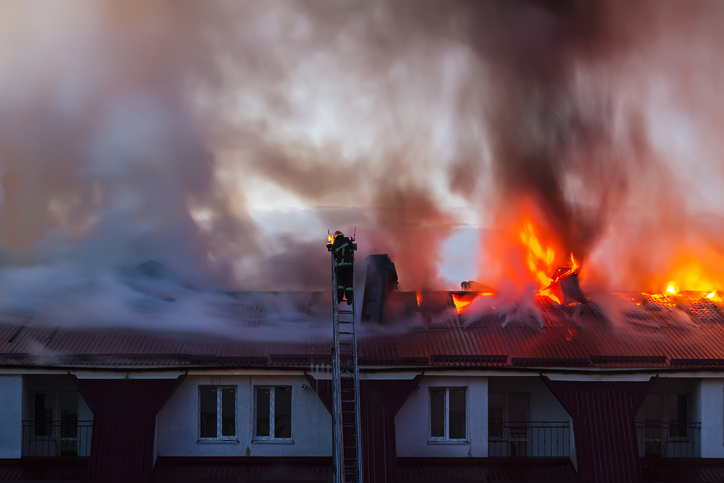
At a Glance: Fire moves through four predictable stages: incipient (the small starting flame), growth (rapid spread and rising heat), fully developed (every combustible burning at peak intensity), and decay (flames dying down as fuel or oxygen runs out). Each stage behaves differently and carries its own risks, including flashover during growth and backdraft during decay.
A fire can go from a single small flame to a room-engulfing blaze in just a few minutes, and knowing how it gets there can save lives and property. Fire is not random. It moves through four predictable stages, from the first spark to burnout, and each one behaves differently and carries its own risks. Understanding the stages of fire helps people respond faster, prevent fires before they start, and limit damage when one does break out. Whether you are a firefighter sharpening your read on fire behavior, a safety professional building a prevention plan, or simply someone who wants to be ready, the four stages are the place to begin.
What Causes a Fire to Start?
Before a fire can move through any stage, it needs the right items to fuel it. Modern fire science describes these as the fire tetrahedron, a four-sided model that replaced the older “fire triangle” once experts recognized a fourth requirement.
A fire needs four things working together at once:
- Heat to raise a material to its ignition temperature
- Fuel to burn, such as wood, fabric, paper, or flammable vapors
- Oxygen to sustain combustion, usually drawn from the surrounding air
- A chemical chain reaction that keeps the burning process feeding itself
That fourth element is what separates sustained fire danger from a brief spark. As long as all four sides of the tetrahedron stay in place, the fire continues.
This model is more than theory, because it explains how every method of putting out a fire actually works. Remove any single element and the fire cannot continue. Water cools the fuel below its ignition temperature, smothering a flame cuts off oxygen, and certain dry chemical agents interrupt the chemical chain reaction directly. This same principle sets up the final stage of a fire, decay, where the flames die down once the fuel or oxygen runs short.
The 4 Stages of Fire
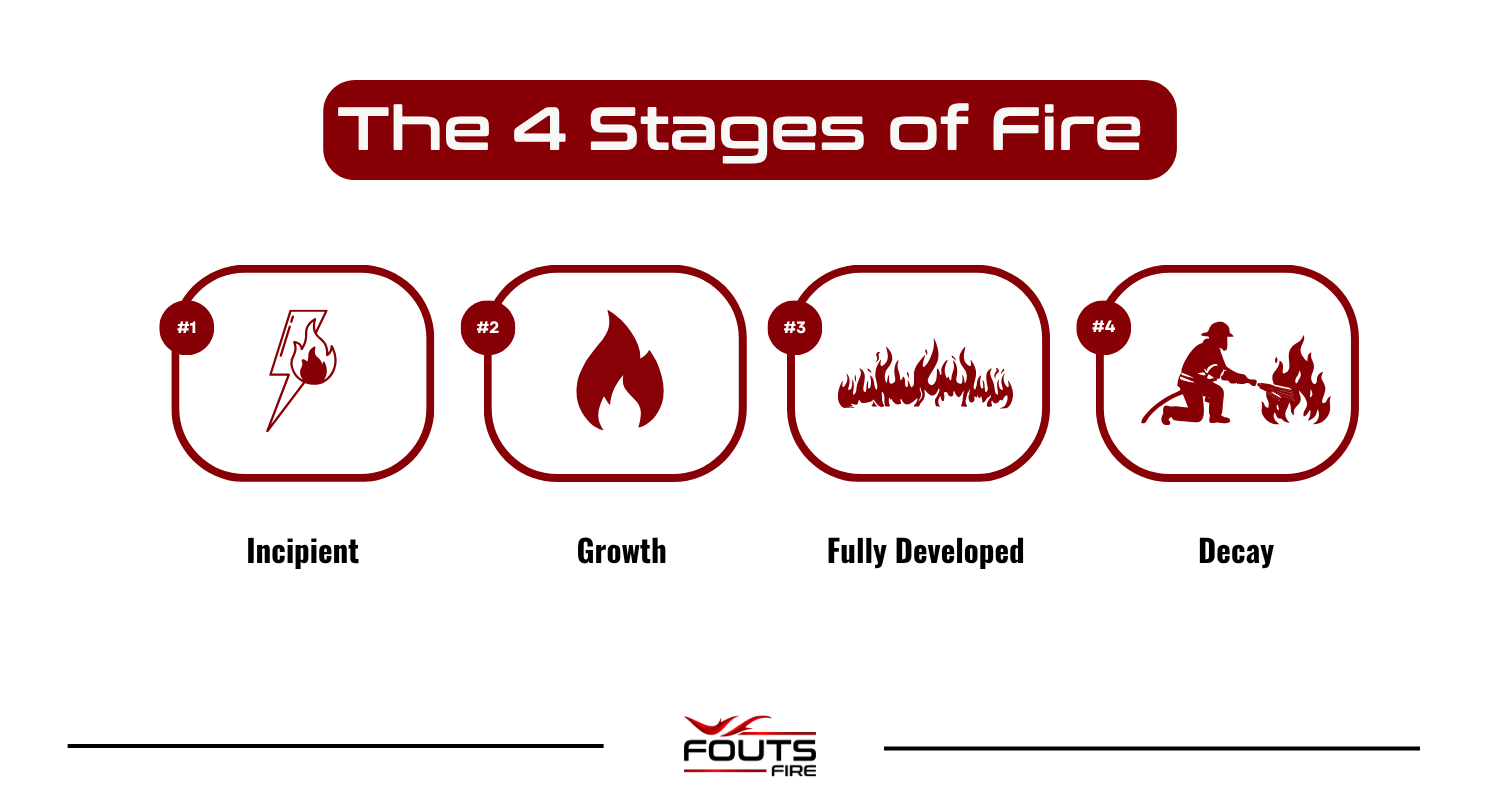
Every fire that grows and burns out passes through the same four stages: incipient, growth, fully developed, and decay. Knowing what happens in each one is the key to understanding fire behavior.
Stage 1: Incipient
The incipient stage is the very beginning, the moment a fire first starts. At this point the flame is small and localized, confined to the object that ignited first. Heat is building, but the surrounding room has not been affected yet, and smoke may be light or barely visible.
This is the easiest stage at which to control or extinguish a fire. A single fire extinguisher, a fire blanket, or quick action can often stop it before it ever spreads. This is also why working smoke detectors matter so much, because catching a fire in the incipient stage gives people the best possible chance to put it out or escape safely.
Stage 2: Growth
In the growth stage, the fire spreads from the first object to nearby fuel sources, and fire conditions change quickly. Temperatures climb fast, and hot gases and smoke rise to collect near the ceiling, radiating heat back down into the room.
This is the most unpredictable stage of a fire. How fast it grows depends on the amount and type of fuel, the available oxygen, and the size and layout of the space. Local weather conditions, such as low humidity or high winds, also impact the spread of a fire.
The growth stage is also where the threat of flashover emerges, the point at which built-up heat becomes intense enough to ignite nearly everything in the room at once. For anyone inside, this is the stage where a manageable fire can turn deadly in seconds.
Stage 3: Fully Developed
The fully developed stage begins once flashover has occurred. At this point, every combustible material in the space is burning, and the fire has reached its maximum intensity. Temperatures peak, often climbing well over 1,000 degrees Fahrenheit, and heat release is at its highest.
This is the most dangerous stage for both people and structures. Survival inside a fully developed fire is unlikely, and the extreme heat begins to weaken building materials, threatening structural collapse. Fire can also extend beyond the original room, spreading through doorways, hallways, and ventilation paths to other parts of the building.
Stage 4: Decay (Burnout)
The decay stage, sometimes called burnout, arrives as the fire runs low on fuel or oxygen. The flames die down, but the danger is not over. The space is still extremely hot, and smoldering materials and hidden hot spots can linger long after visible flames disappear.
Decay carries a specific and serious risk: backdraft. When a fire has consumed most of the available oxygen, it can smolder in a superheated, oxygen-starved space. If fresh oxygen suddenly rushes in through an opened door or a broken window, the result can be a violent re-ignition or explosion.
Flashover vs. Backdraft: What to Know
Flashovers and backdrafts are two of the most dangerous events in a fire, and they are easy to confuse. The difference comes down to which stage they belong to and what triggers them.
Flashover is tied to the growth stage. It is the near-simultaneous ignition of almost everything in a room, driven by built-up heat that finally pushes the surrounding flammable materials to their ignition temperature. Once the conditions for an open fire are met, there is little to no warning. One moment a room has isolated flames, and the next the entire space erupts.
Backdraft is tied to the decay stage. It is an explosive re-ignition that happens when oxygen rushes into a hot, oxygen-starved space that is full of unburned, superheated gases. Opening a door or window can be the trigger. This is exactly why trained firefighters read the smoke color, movement, and heat signs at a structure before they make entry, because those signals can warn of a backdraft waiting to happen.
How the Stages of Fire Affect Firefighting
Firefighters do not attack every fire the same way. They read the fire scene to decide on the safest and most effective response.
Incipient Stage Response
The ideal time to intervene
A single extinguisher or a fast initial attack can stop the spread before the fire gains momentum. Fast detection and reporting are what make this possible, which is why early alarms save lives and property.
Growth Stage Response
The stage when the fire starts to expand
During this stage, the firefighting force works to control the spread while watching closely for flashover warning signs, such as rapidly rising heat, rollover (flames moving across the ceiling), and thick, darkening smoke. Ventilation and water application have to be timed carefully, because the wrong move at the wrong moment can push the fire into new areas or accelerate it.
Fully Developed Stage Response
The most resource-heavy stage
The priorities shift to containment and protecting nearby structures, known as exposures, to keep the fire from spreading. Crew safety becomes the top concern, and firefighters often switch to a defensive attack from outside when interior conditions are too dangerous to enter.
Decay Stage Response
The stage when fire investigation & damage assessment begin
Even as the fire winds down, crews stay alert for backdraft. They manage remaining hot spots and begin overhaul, the careful process of searching for hidden, smoldering fire inside walls and ceilings.
Why Understanding the Stages of Fire Matters
Knowing the stages of fire pays off in practical ways. It supports a faster response when seconds count, because recognizing how quickly a fire can move encourages people to act and evacuate early. It leads to smarter fire prevention, since understanding the fire tetrahedron shows how removing fuel, heat, or ignition sources stops a fire before it starts. It improves escape planning for homes and workplaces, helping families and teams prepare before an emergency. It also emphasizes why early detection and damage reduction are worth investing in, because the difference between a small loss and a total one often comes down to how soon someone acts.
Equip Your Department for Emergencies with Fouts Fire
Fire develops through four stages: incipient, growth, fully developed, and decay, and each one behaves differently and carries its own risks. Understanding how a fire moves through these stages helps people respond faster, prevent fires, and stay safe, while hazards like flashover and backdraft show just how unpredictable fire can be. Early detection and quick action in the incipient stage offer the best chance to limit damage and protect the people and property that matter most.
At Fouts Fire, we provide fire apparatus models that are designed to provide dependable support to firefighters, no matter what stage of fire they’re fighting. Our mission is to equip firefighters across North America with the tools they need to fight many different types of emergencies. The high-quality apparatus models in our lineup include high-capacity tankers, compact Fouts FOUR mini pumpers, and rescue trucks available in light-duty, medium-duty, and heavy-duty models. Our nationwide dealer network can deliver the standardized fire apparatus that each fire department needs to protect their communities. Find a Dealer near you to find out what Fouts Fire can do for your station.