
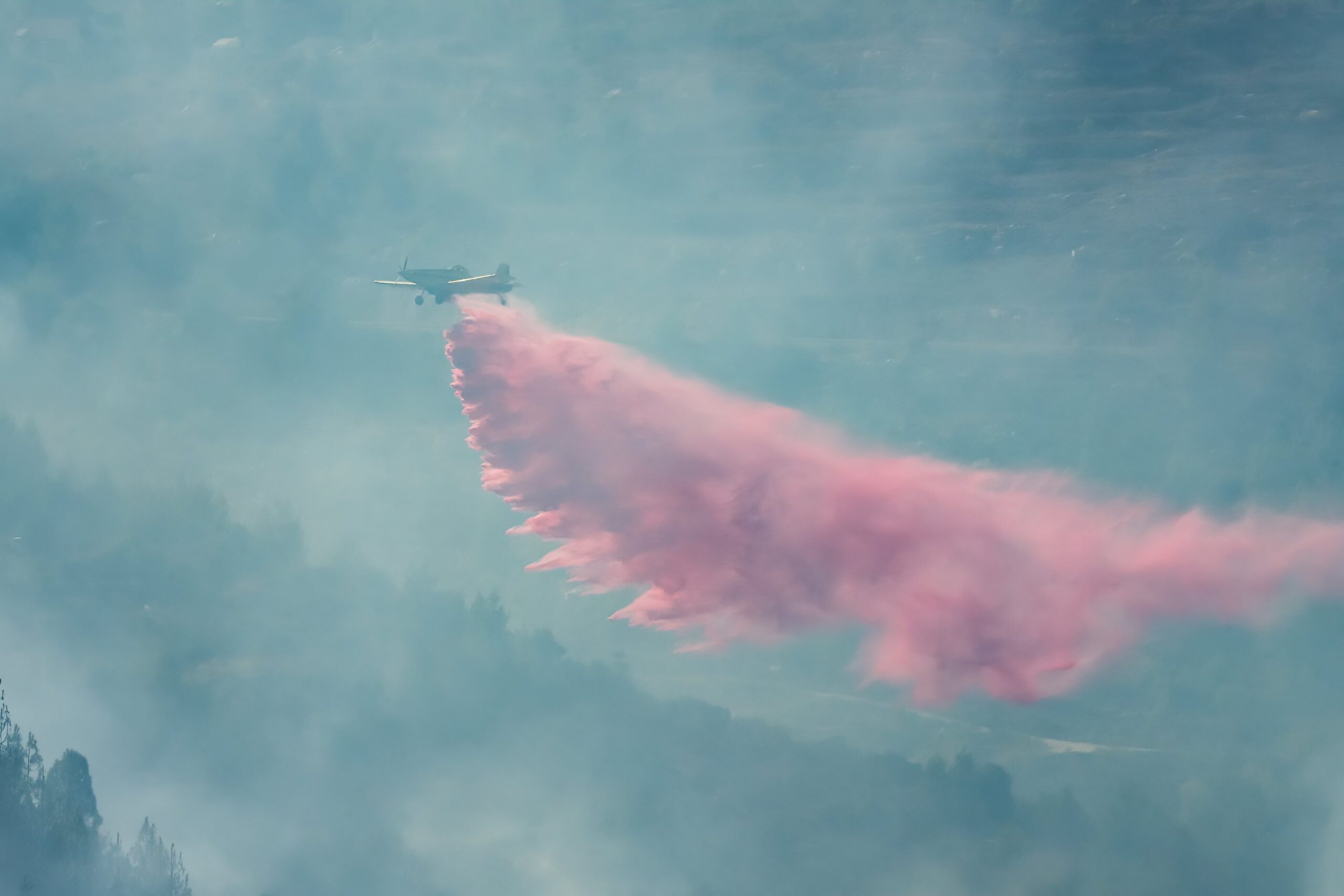
At a Glance: Fire retardant materials are engineered to slow or stop the spread of flames by disrupting the combustion process. These innovations are used for a variety of firefighting purposes, including aerial wildfire suppression and structural fire protection that delays heat damage.
At their core, fire retardants are chemical compounds that interrupt the combustion process, or the complex chemical reaction that sustains fire. Some fire retardant materials create a protective barrier between the fuel and oxygen, reducing the fire’s ability to spread. Others chemically disrupt the combustion process by triggering chemical reactions that cool the fuel’s surface. This approach to fire protection makes modern fire retardants effective in various firefighting scenarios, from wildfires to structural fires.
The strategic use of fire retardants and fire-resistant materials is being increasingly popular in modern firefighting operations. These materials serve as a critical line of defense for fire suppression and prevention, whether dropped from an aircraft or incorporated into building materials. Their importance in fire management strategies continues to grow as climate change leads to more frequent and intense fire events.

Chemical Composition and Classifications of Fire Retardants
Fire retardant materials are chemicals designed to disrupt the combustion process, and they accomplish this in several different ways. These fire-resistant materials can be broadly categorized into four primary types based on chemical structure, each offering unique advantages in different fire protection scenarios.
Phosphate-Based Retardants
These fire retardant materials operate through multiple forms. In their most common form, these compounds create a protective char layer when exposed to intense heat, physically isolating the fuel source from oxygen. Additionally, phosphorus compounds can release phosphoric acid during combustion, which reduces flammability.
Halogenated Compounds
These fire retardants work primarily through chemical interference with the combustion process. These flame-retardant chemical compounds, which include brominated and chlorinated compounds, release halogen atoms that actively capture free radicals in the flame, effectively breaking the chain reaction that sustains fire. While historically widespread, many traditional retardant chemicals are being phased out due to health and environmental concerns.
Nitrogen-Based Compounds
Melamine and similar nitrogen-based flame retardant materials release nitrogen gas when exposed to high temperatures, which dilutes flammable gases and reduces oxygen availability to the fire. These resistant materials are increasingly popular in modern fire safety systems due to their low toxicity and minimal environmental impact compared to halogenated compounds.
Mineral-Based Retardants
These mineral-based materials, including aluminum hydroxide and magnesium hydroxide, function through endothermic decomposition. When exposed to extreme heat, these compounds release water vapor and form a protective oxide layer, cooling the material and creating a protective barrier. Their stability and non-toxic nature make them ideal for applications with high environmental and health considerations.
Modern fire protection often uses combinations of these classifications, maximizing fire resistance while minimizing environmental impact in many different firefighting scenarios.
Aerial Fire Retardant Applications
Aircraft delivery systems for fire retardant materials have improved significantly, now incorporating sophisticated computer-controlled releases that account for wind speed, aircraft speed, and altitude. Modern aircrafts are equipped with tanks featuring precision flow control and multiple compartment systems, allowing for strategic partial drops when necessary.
Long-Term Fire Retardants
Long-term fire retardants play a crucial role in aerial firefighting, which is one of the most effective frontline defenses against the spread of fire. These flame-retardant chemicals consist of ammonium phosphate or sulfate-based compounds that maintain fire resistance even after the water they’re mixed with evaporates. The red coloring agent added to these fire retardant solutions allows pilots and ground crews to accurately track coverage patterns and distribution across fire lines.
Applying fire retardants requires precise delivery systems and carefully planned drop patterns. Large aircrafts release these flame retardant substances to create consistent coverage patterns that can stretch up to a quarter-mile in length, depending on terrain and weather conditions. These retardants work by temporarily altering a forest’s chemical properties, making it significantly more resistant to combustion.

Short-Term Fire Retardants
Short-term flame retardants and suppressants offer several tactical options for fire protection operations:
- Water Enhancers: These build a protective wet layer that slows evaporation and minimizes drift.
- Fire-Fighting Gels: These remain effective for several hours under intense heat for several hours if undisturbed, making them ideal for direct attacks.
- Foam Concentrates: For Class B fires, these create a smothering blanket that cools burning materials while preventing oxygen from reaching the fuel source.
Effective aerial fire retardant applications require extensive training and experience. Pilots typically lay down fire retardants in parallel or crossing patterns to establish proper coverage patterns.

Building Materials and Structural Fire Protection
Modern construction relies on sophisticated fire protection strategies that combine both building materials with fire-retardant properties and active building-wide fire safety systems. Materials with fire-retardant properties form the first line of defense, working silently but effectively to contain and delay the spread of fire without human intervention.
Intumescent Coatings
One of the most advanced flame-retardant materials available, these specialized fire-retardant chemicals expand significantly when exposed to high temperatures. This forms a protective char layer that insulates structural elements, providing protection from intense heat. These fire-retardant coatings can expand up to 50 times their original thickness, providing valuable time during a fire.
Fire-Resistant Insulation
Fire-resistant insulation are crucial components in passive fire protection strategies. Gypsum-based wallboards, mineral wool panels, and calcium silicate boards are engineered specifically to maintain their flame resistance during fires.. These resistant materials can be used to create walls, floors, and ceilings that meet National Fire Protection Association standards.
Built-In Active Fire Protection Systems
Modern active fire protection encompasses dynamic systems that respond to fire events.
- Sprinklers: The first line of fire suppression in many buildings, most sprinkler systems are heat-activated devices.
- Built-In Fire Suppression Systems: These include systems that can detect fires at their earliest stages and deploy the appropriate solutions based on the specific fire type and location, such as water mist, foam, or clean agents.
- Construction: New projects must follow strict safety standards that specify appropriate fire-resistant material based on factors like building type and occupancy type. This creates multiple layers of protection that work hand-in-hand to prioritize building safety.
Prepare for the Future with Fouts Fire
The landscape of fire retardant technology continues to evolve rapidly, with innovative fire-resistant materials emerging at the intersection of safety and sustainability. Sustainable fire-resistant materials that promise enhanced fire resistance while reducing environmental impact, such as phosphorus-based retardants and mineral-based flame retardant formulations, are gaining traction as alternatives to traditional retardant chemicals.
The future of fire protection lies in how this fire prevention technology can be utilized. Modern approaches combine active and passive fire resistance methods to provide comprehensive fire safety while maintaining sustainability. As technology continues to progress, we can expect more efficient, environmentally conscious solutions that provide superior fire resistance while meeting safety standards.
Fouts Fire builds new, high-quality, cost-competitive fire apparatus for departments across the United States and Canada. If you or your department is considering a new apparatus, you can find your local dealer here.