
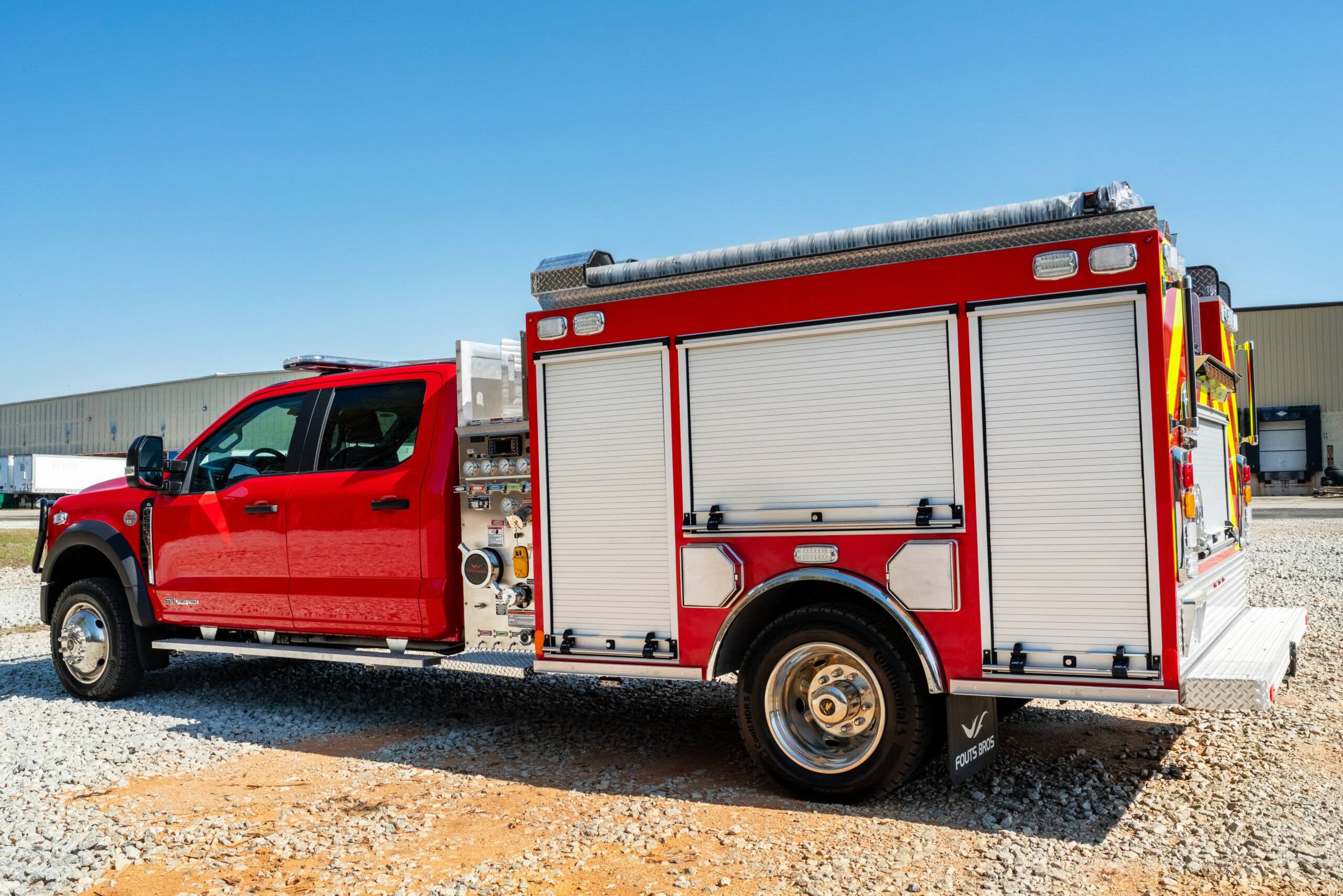
At a Glance: A mini pumper fire truck gives fire departments a compact, maneuverable option for quick first-attack firefighting, with an onboard pump, water tank, and hose system in a smaller package than a full-size engine. The right configuration depends on the department’s response area, water supply, and fleet needs, with pump capacity, tank size, chassis, and equipment all playing a role in the decision.
In situations where a full-size engine is too large or too slow, a mini pumper fire truck gives departments a fast, flexible option for first-attack firefighting. These compact fire apparatus are designed to carry many of the same core capabilities as a traditional engine, including an onboard pump, water tank, and hose, while using a smaller chassis that improves maneuverability.
A mini pumper can help departments reach rural properties, narrow streets, brush-prone areas, and other locations where larger trucks may have difficulty operating. However, choosing the right apparatus requires understanding what a mini pumper can do, where it fits within a fleet, and how its specifications match the department’s response needs.
From pump capacity and tank size to chassis selection and equipment storage, every part of the build affects performance. Knowing these details helps fire departments invest in a truck that supports their mission without paying for capabilities they do not need.
What Is a Mini Pumper Fire Truck?
A mini pumper fire truck is a compact fire apparatus built for quick response and first-attack firefighting. It typically includes a water tank, fire pump, hose storage, and firefighting equipment similar to a larger engine, but it is mounted on a smaller light-duty or medium-duty commercial chassis.
Mini pumpers are especially useful for departments that need a smaller vehicle capable of handling initial fire attack while maintaining access in areas where traditional engines may be difficult to maneuver. It is smaller and lighter than a full-size engine, creating a middle ground between the two apparatus types.
How a Mini Pumper Works
A mini pumper operates similarly to a traditional pumper engine. When arriving at a scene, firefighters can use the onboard water supply and pump system to begin suppression efforts immediately rather than waiting for a water source connection.
Once the initial water supply is used, the truck can refill from a hydrant, tanker, or drafting operation depending on the department’s resources and response area. In many cases, the mini pumper handles the first attack line while larger engines provide additional water, personnel, and equipment.
Where It Fits Among Fire Apparatus
Understanding where a mini pumper fits among fire apparatus types helps departments determine if it fills a gap in their fleet.
A mini pumper is:
- Smaller and easier to maneuver than a full-size engine
- Less expensive to operate than many traditional pumpers
- A flexible option for rural, suburban, and access-limited response areas
For many departments, a mini pumper works as a first-out unit or as a supplement to frontline engines rather than a replacement for them.
Typical Mini Pumper Specs and Configurations
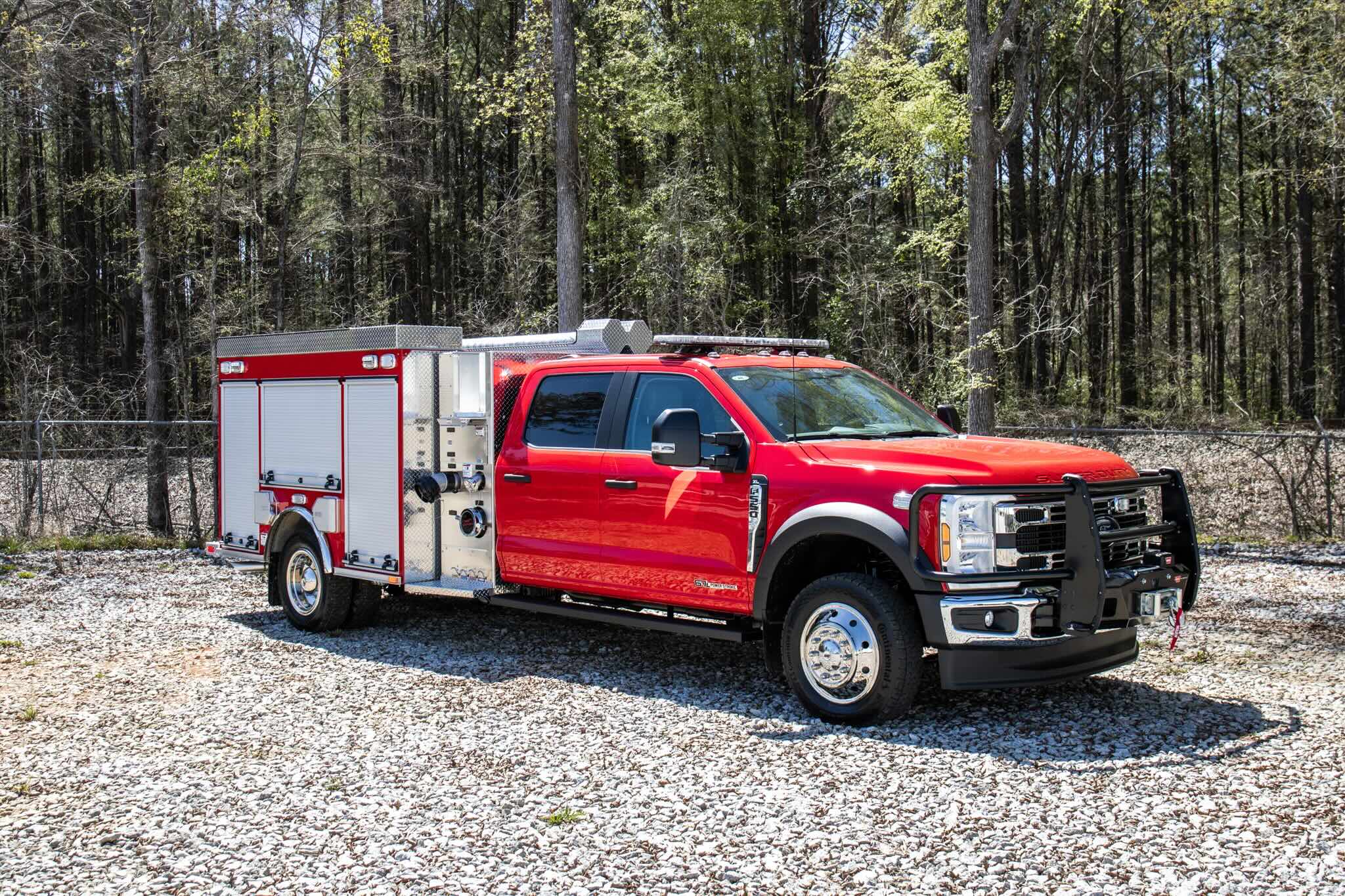
Mini pumper specifications vary widely depending on the department’s goals, but most are designed around balancing water capacity, pump performance, equipment storage, and vehicle weight.
Chassis and Cab
Many mini pumpers are built on commercial chassis such as the Ford F-550 or similar light- and medium-duty platforms. These chassis provide a balance of capability and maneuverability while allowing departments to customize the truck for their terrain and operational needs.
Common chassis options include:
- Two-wheel-drive or four-wheel-drive configurations
- Two-door, extended cab, or crew cab layouts
- Diesel-powered engines designed for heavier loads
- Custom bodies built around department equipment requirements
Departments operating in rural areas, steep terrain, or areas with limited road access may prioritize four-wheel drive and a smaller footprint.
Pump Capacity
The mini pumper pump capacity depends on the intended mission of the apparatus. Some builds are designed for quick attack operations with moderate flow rates, while others include pumps capable of handling more demanding suppression needs.
Common pump capacities can range from approximately 500 gallons of water per minute (GPM) to more than 1,000 GPM depending on the build.
Some configurations include:
- Midship pumps
- Split-shaft pumps
- PTO-driven pump systems
- Auxiliary high-pressure pumps for smaller fires
Departments should select pump capacity based on the type of incidents the truck will regularly handle rather than simply choosing the highest available rating.
Water and Foam Capacity
A mini pumper water tank is typically smaller than what is found on a full-size engine but still provides enough water for initial attack operations.
Common configurations may include:
- 250 to 400-gallon water tanks
- Class A foam tanks ranging from approximately 10 to 30 gallons
- Foam proportioning systems for improved fire suppression
Some departments prioritize larger tanks for rural response areas with limited water access, while others focus on pump performance and rapid connection to a water supply.
Body and Equipment Options
The body design determines how effectively crews can access equipment during an emergency.
Common features include:
- Aluminum bodies for reduced weight
- Roll-up or hinged compartment doors
- Hose beds and preconnected attack lines
- Scene lighting and warning systems
- Custom equipment mounting
A well-designed body layout improves response efficiency by ensuring firefighters can quickly locate and deploy equipment.
Advantages of a Mini Pumper
Speed and Maneuverability
One of the biggest advantages of a mini fire truck pumper is its compact size. Smaller dimensions allow these trucks to navigate:
- Narrow residential streets
- Long rural driveways
- Tight parking areas
- Trails and difficult access points
First-Attack Capability
A mini pumper gives firefighters the ability to begin suppression immediately after arrival. Instead of waiting for additional resources, crews can use the truck’s onboard tank and pump to attack smaller fires quickly.
These capabilities make mini pumpers useful for:
- Vehicle fires
- Small structure fires
- Brush fires
- Initial suppression before additional apparatus arrive
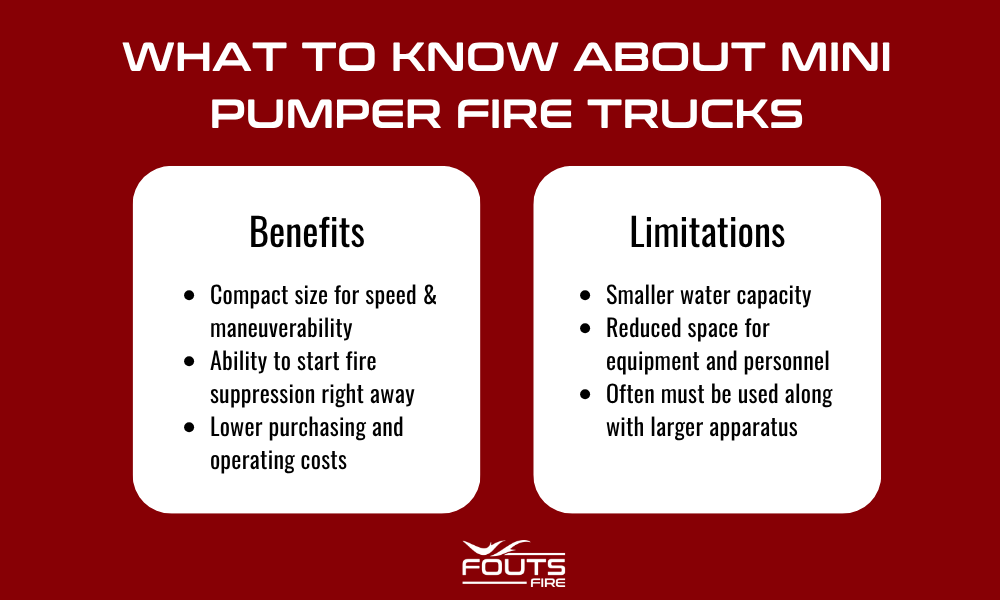
Lower Cost to Buy and Operate
For departments managing limited budgets, a mini pumper can provide valuable capabilities at a lower cost than a full-size engine.
Potential cost benefits include:
- Lower purchase price
- Reduced fuel consumption
- Lower maintenance costs
- Easier storage requirements
Reduced Wear on Frontline Engines
Using a mini pumper for smaller calls can reduce unnecessary wear on larger apparatus. Departments may preserve the service life of their primary engines by assigning the smaller truck to incidents where a full-size engine is not required.
Limitations to Keep in Mind
While mini pumpers provide flexibility, they are not designed to replace every capability of a traditional engine.
Smaller Water Supply
A smaller tank means a mini pumper may need additional water support during extended firefighting operations.
Departments must consider:
- Hydrant availability
- Tanker support
- Drafting capabilities
- Typical incident duration
Reduced Equipment and Personnel Space
Because the apparatus is smaller, there is less room for equipment and crew members.
Compared with a full-size engine, a mini pumper may have:
- Fewer available compartments
- Reduced hose capacity
- Smaller crew seating capacity
- Less room for specialized equipment
Not a Replacement for a Full Engine
A mini pumper works best as part of a complete response strategy. Larger incidents may still require full-size engines, additional personnel, aerial equipment, and expanded water supply operations. The goal is not to replace frontline apparatus but to create a flexible response option that improves efficiency.
Common Uses for Mini Pumpers
Where Mini Pumpers Excel
Mini pumpers are especially useful in areas with:
- Rural properties and long driveways
- Limited hydrant access
- Narrow roads
- Wildland-urban interface risks
They are also valuable for departments looking for a faster first-out vehicle.
Departments That Benefit Most
A mini pumper may be a good fit for:
- Volunteer fire departments
- Combination departments
- Rural districts
- Departments managing aging engine fleets
What to Consider Before Buying
Match the Build to the Response Area
Before purchasing a mini pumper, departments should evaluate:
- Terrain and road conditions
- Water supply availability
- Required response times
- Existing fleet capabilities
Spec the Pump and Tank to the Mission
Pump size and tank capacity should support the truck’s intended role. Departments should consider:
- Expected flow requirements
- Available water sources
- Foam needs
- Equipment weight
- National Fire Protection Association (NFPA) compliance goals
Questions to Ask Before Purchasing
Before selecting a mini pumper, ask:
- What role will this truck fill in the department’s response plan?
- What incidents will it handle most often?
- How much water is realistically available at those incidents?
- How does the cost compare with the workload it will take on?
- Does the equipment match existing department operations?
Cost and Specification Considerations
The cost of a mini pumper depends on the chassis, pump system, tank size, body design, and equipment package.
Factors affecting price include:
- Chassis type and drivetrain
- Pump capacity
- Water and foam systems
- Lighting and electronics
- Equipment requirements
When evaluating cost, departments should consider the long-term value rather than only the initial purchase price. A properly designed mini pumper can reduce wear on larger apparatus, improve response flexibility, and provide years of reliable service.
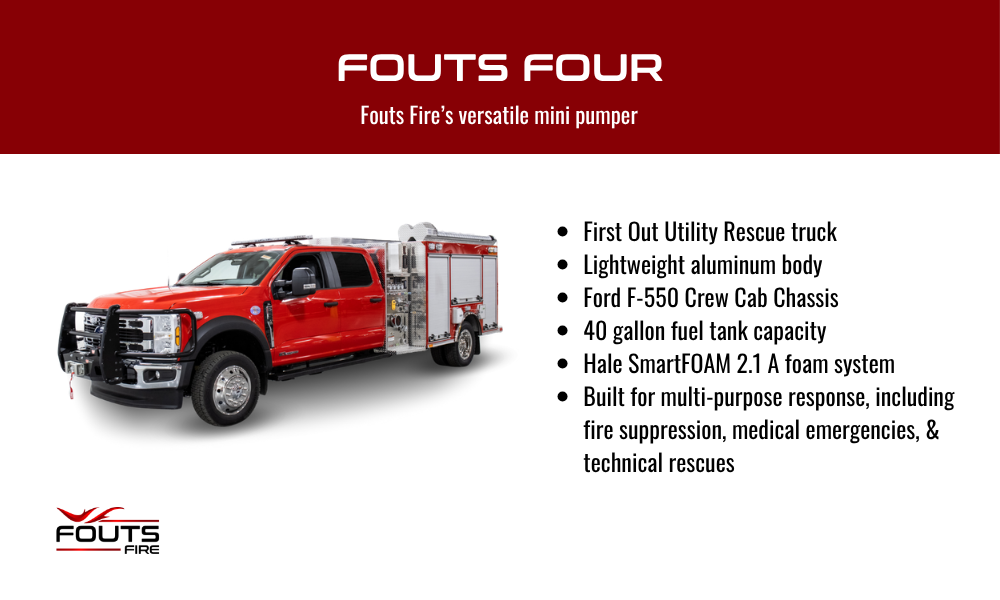
Fouts FOUR: Fouts Fire’s Versatile Mini Pumper
Fouts FOUR is a revolutionary First Out Utility Rescue truck that is built to handle the diverse demands of modern fire departments. This versatile mini pumper makes it easy to carry a wide range of tools and equipment without sacrificing agility or performance.
Some features that make this rescue apparatus stand out include:
- Built on a Ford F-550 Chassis with a 40 gallon fuel tank capacity
- Designed with a lightweight 9-foot aluminum body design
- Equipped with a Hale SmartFOAM 2.1 A foam system and DSD 1500 GPM pump
- Outfitted with AMDOR roll-up doors and a Whelen LED NFPA lighting & siren package
- Capable of multi-purpose response, including fire suppression, medical emergencies, and technical rescue
Explore Mini Pumpers & More Fire Apparatus Models with Fouts Fire
A mini pumper fire truck provides departments with a compact, maneuverable option for quick first-attack firefighting. With its onboard pump, water supply, and hose capacity, it can reach areas where larger apparatus may struggle while offering lower operating costs.
However, a mini pumper is not a replacement for a full fire engine. The right choice depends on the department’s response area, water supply, call types, and operational goals. By matching the chassis, pump, tank, and equipment to the mission, departments can invest in an apparatus that delivers the capabilities they need.
Fouts Fire is one of the leading fire apparatus manufacturers in North America. With a variety of apparatus options, including the Fouts FOUR mini pumper, Fouts Fire can provide departments with comprehensive solutions that help them protect their communities.
Ready to get started with Fouts? Find a Dealer near you or contact our team to find out what we can help with.