At a Glance: A fire engine is designed primarily to pump water and deliver it to fires through hoses, focusing on water supply and suppression. A fire truck is built for aerial operations, rescue, and transporting specialized equipment, providing elevated access, and search & rescue capabilities. Both of these vehicles are critical for an effective fire response.
Most people use the terms fire engine and fire truck interchangeably. Within the fire service, however, these terms mean very different things. A fire engine and a fire truck are built for distinct purposes, carry different equipment, and perform different roles on the fireground.
Understanding the difference between a fire engine and a fire truck helps shed light on how modern firefighting works. Each type of apparatus plays a specialized role, and successful emergency response depends on those roles working together.
What Is a Fire Engine?
Definition and Primary Purpose
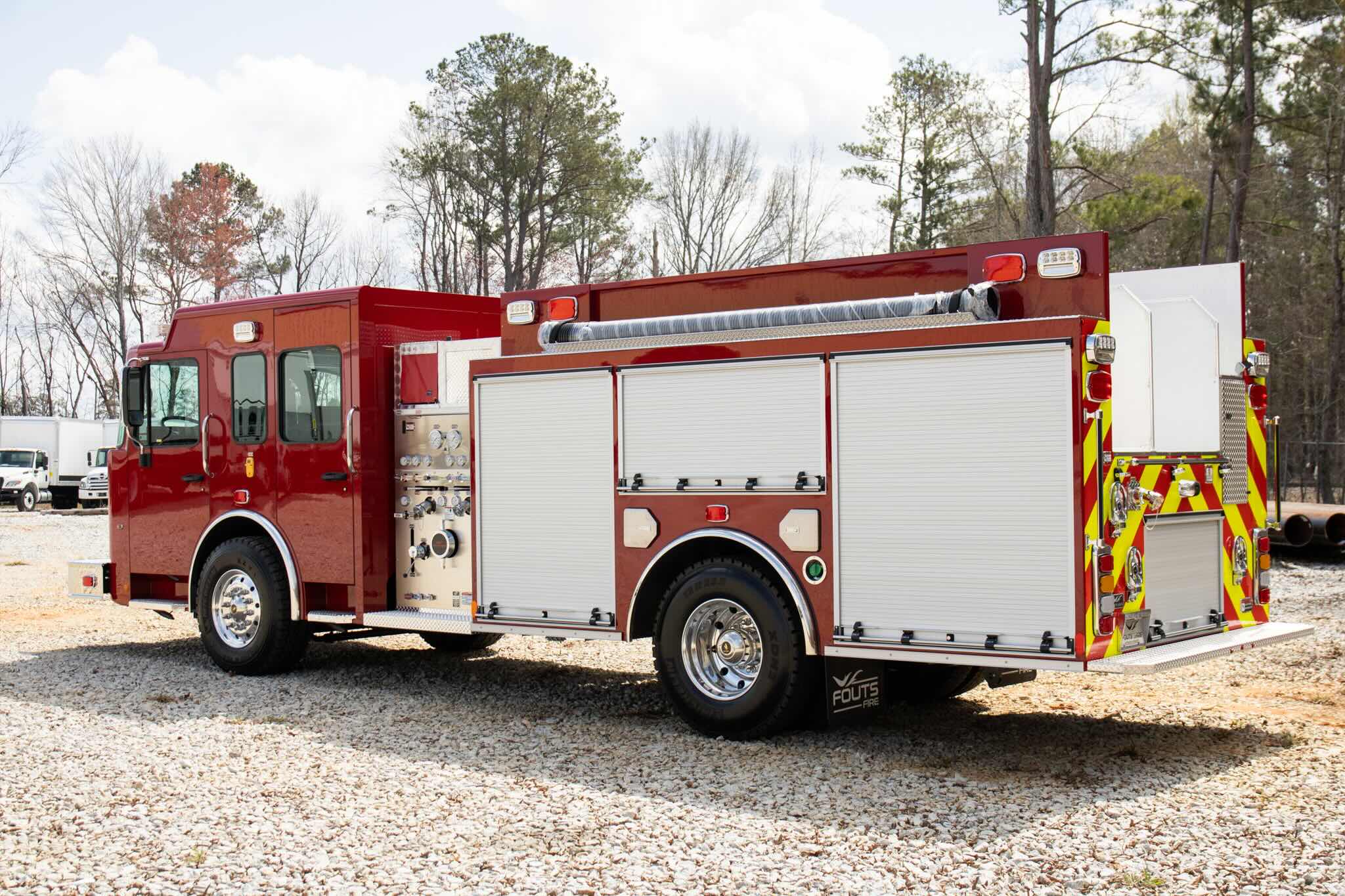
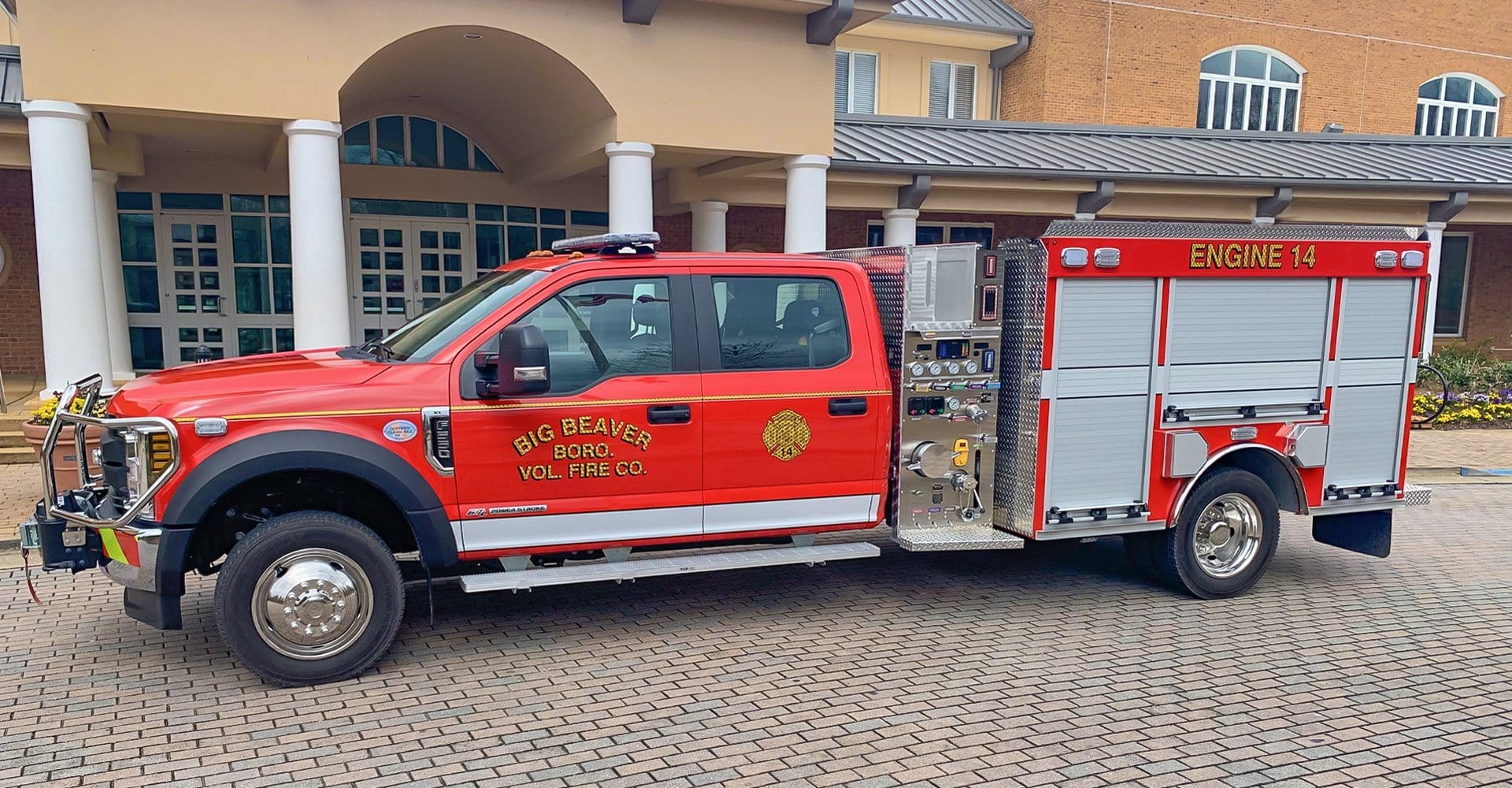
A fire engine is a firefighting apparatus primarily designed to pump water and deliver it to a fire through hoses and nozzles. Fire engines are also commonly called pumpers, pumper trucks, or engine company apparatus. Their main job is fire suppression, or putting water on the fire quickly and effectively.
In many departments, the fire engine is often the first apparatus dispatched to a structure fire. Engines are built for initial attack and sustained water delivery, making them the backbone of most firefighting operations.
Key Components and Features
Fire engines are equipped with systems and tools focused on water movement and fire attack. Core features include:
- Fire Pump: A high-capacity water pump, usually rated between 1,000 and 2,000+ gallons per minute, capable of moving large volumes of water from hydrants or tankers to hose lines
- Water Tank: An onboard tank, typically holding 500 to 1,500 gallons of water, allowing firefighters to begin suppression immediately
- Hose Storage: Multiple compartments for attack lines, supply hose, and specialty hose
- Hose Connections: Intake and discharge connections for fire hydrants, relay pumping, and additional hose lines
- Ground Ladders: Basic ladders such as extension ladders, roof ladders, and attic ladders for access and rescue
- Basic Rescue Tools: Forcible entry tools, hand tools, and portable equipment
- Firefighter Seating: Enclosed cab seating that often accommodates four to six crew members
What Fire Engines Carry
Because engines are built for suppression, their firefighting equipment load reflects that focus. Common items include:
- Attack hose lines (1¾-inch and 2½-inch)
- Large-diameter supply hose for hydrant connections
- Nozzles for different fire attack strategies
- Portable fire extinguishers
- Hand tools such as axes, halligan bars, and pike poles
- Ground ladders in several sizes
- Basic medical equipment
- Self-contained breathing apparatus (SCBA)
- Salvage covers and ventilation fans
Fire engines are designed to establish a water supply, advance hose lines, and control the fire as quickly as possible.
What Is a Fire Truck?
Definition and Primary Purpose
A fire truck is a firefighting apparatus primarily designed for aerial operations and equipment transport, rather than pumping water. In most cases, “fire truck” refers to ladder trucks or aerial apparatus. These vehicles are built to provide elevated access for rescue, ventilation, and elevated water streams.
Fire trucks are also commonly called ladder trucks, aerial ladders, truck company apparatus, or hook and ladder. While they can support fire suppression, their primary mission is access, rescue, and support.
Key Components and Features
Fire trucks are easily recognizable due to their aerial devices and specialized equipment. Key features include:
- Aerial Ladder or Platform: Extends approximately 75 to 135+ feet to reach upper floors of buildings
- Turntable: A rotating base that allows the aerial device to operate in multiple directions
- Outriggers or Stabilizers: Deployed to stabilize the vehicle when the ladder or platform is in use
- Ground Ladders: A large complement of ladders in various lengths and configurations
- Equipment Compartments: Extensive storage for rescue, ventilation, and forcible entry tools
What Fire Trucks Carry
Fire trucks carry a wide range of specialized tools to support operations beyond water delivery, including:
- Aerial ladder or aerial platform
- Extensive ground ladder inventory, including long extension ladders and roof ladders
- Ventilation equipment like positive pressure fans, smoke ejectors, and power saws
- Forcible entry tools
- Rope rescue equipment
- Salvage covers and water control devices
- Scene lighting and generators
- Technical rescue equipment
On a quint-style apparatus, trucks may also carry limited hose and water, but this is not the primary function of a traditional ladder truck.
Key Differences Between Fire Engines and Fire Trucks
Primary Function
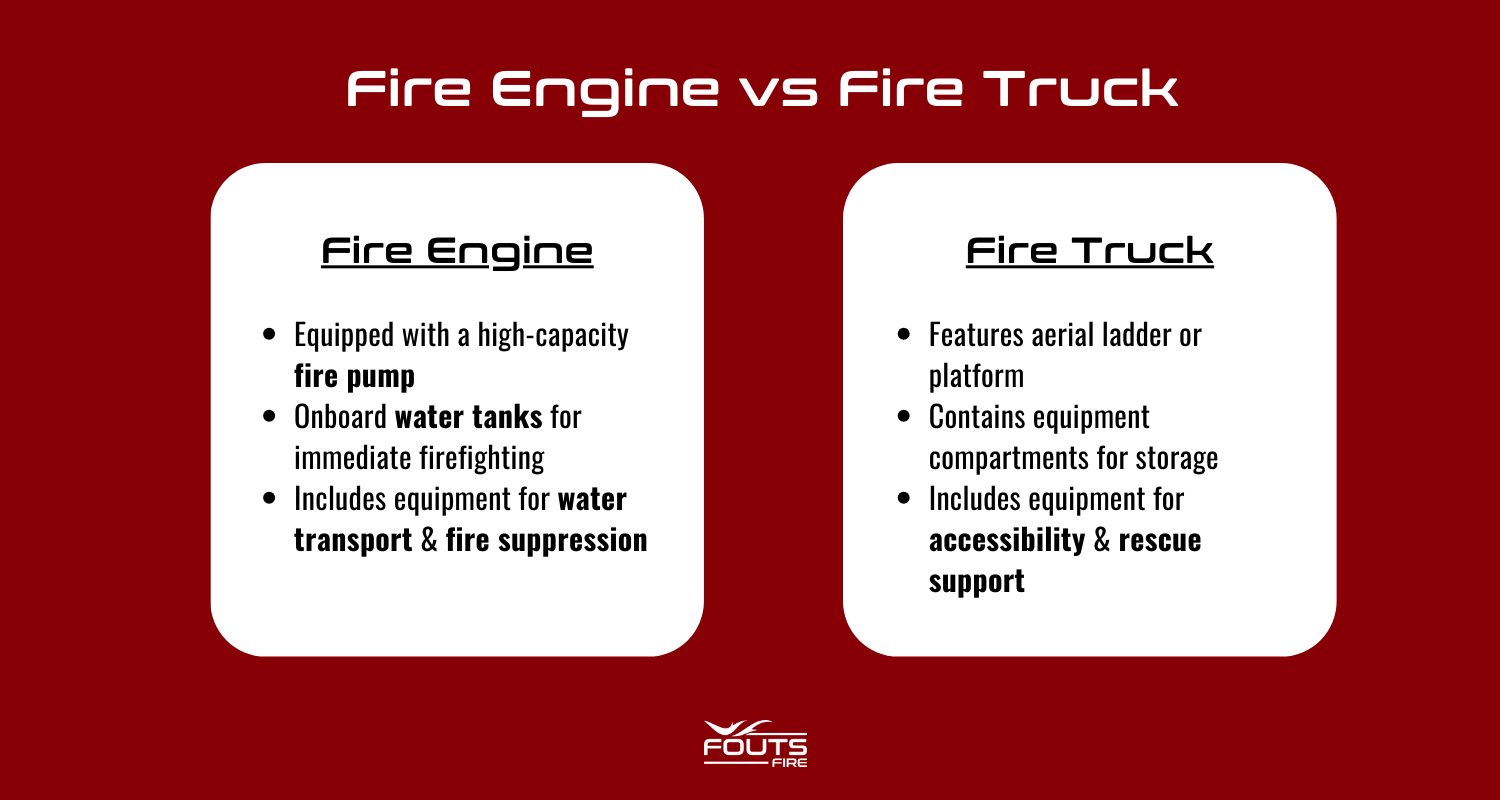
- Fire Engine: Pumping water to extinguish fires
- Fire Truck: Providing elevated access, rescue capability, and specialized support equipment
Water Pumping Capability
- Fire Engine: Typically equipped with a high-capacity fire pump as a core feature
- Fire Truck: Many traditional ladder trucks do not have pumps; quints include pumping capability
Water Supply
- Fire Engine: Carries a substantial onboard water tank for immediate attack
- Fire Truck: Traditional models carry little or no water and rely on engines for supply
Aerial Capability
- Fire Engine: No aerial ladder; relies on ground ladders
- Fire Truck: Features an aerial ladder or platform as a defining characteristic
Equipment Focus
- Fire Engine: Hoses, nozzles, pumps, and water delivery equipment
- Fire Truck: Ladders, rescue tools, ventilation equipment, and forcible entry tools
Crew Roles
- Engine Company: Focuses on fire attack, water supply, and initial suppression
- Truck Company: Focuses on search and rescue, ventilation, forcible entry, and aerial operations
Size and Configuration
- Fire Engine: Generally shorter and easier to maneuver
- Fire Truck: Often longer due to aerial device; some use tiller (rear-steer) configurations for maneuverability
Engine Company vs Truck Company Operations
Engine Company Responsibilities
Engine companies handle tasks directly related to controlling the fire, including:
- Advancing hose lines for initial fire attack
- Establishing water supply from hydrants or tankers
- Suppressing and extinguishing the fire
- Protecting exposures to prevent fire spread
- Conducting basic search and rescue during suppression
- Performing overhaul to ensure the fire is fully out
Truck Company Responsibilities
Truck companies focus on access, life safety, and support functions, such as:
- Searching for and rescuing trapped occupants
- Forcible entry to gain access to locked or secured structures
- Ventilation to release heat and smoke
- Raising ladders for firefighter access and emergency egress
- Performing aerial operations for rescues or master streams
- Salvage operations to reduce property damage
Working Together at the Fire Scene
Fireground success depends on coordination. Engines and trucks operate side by side, each handling tasks that complement the other. While engines concentrate on water and suppression, trucks support operations by improving visibility, access, and safety. Incident commanders assign roles based on each company’s capabilities, ensuring that all aspects of the emergency are addressed efficiently.
Variations and Hybrid Apparatus
Quints (Quintuple Combination Apparatus)
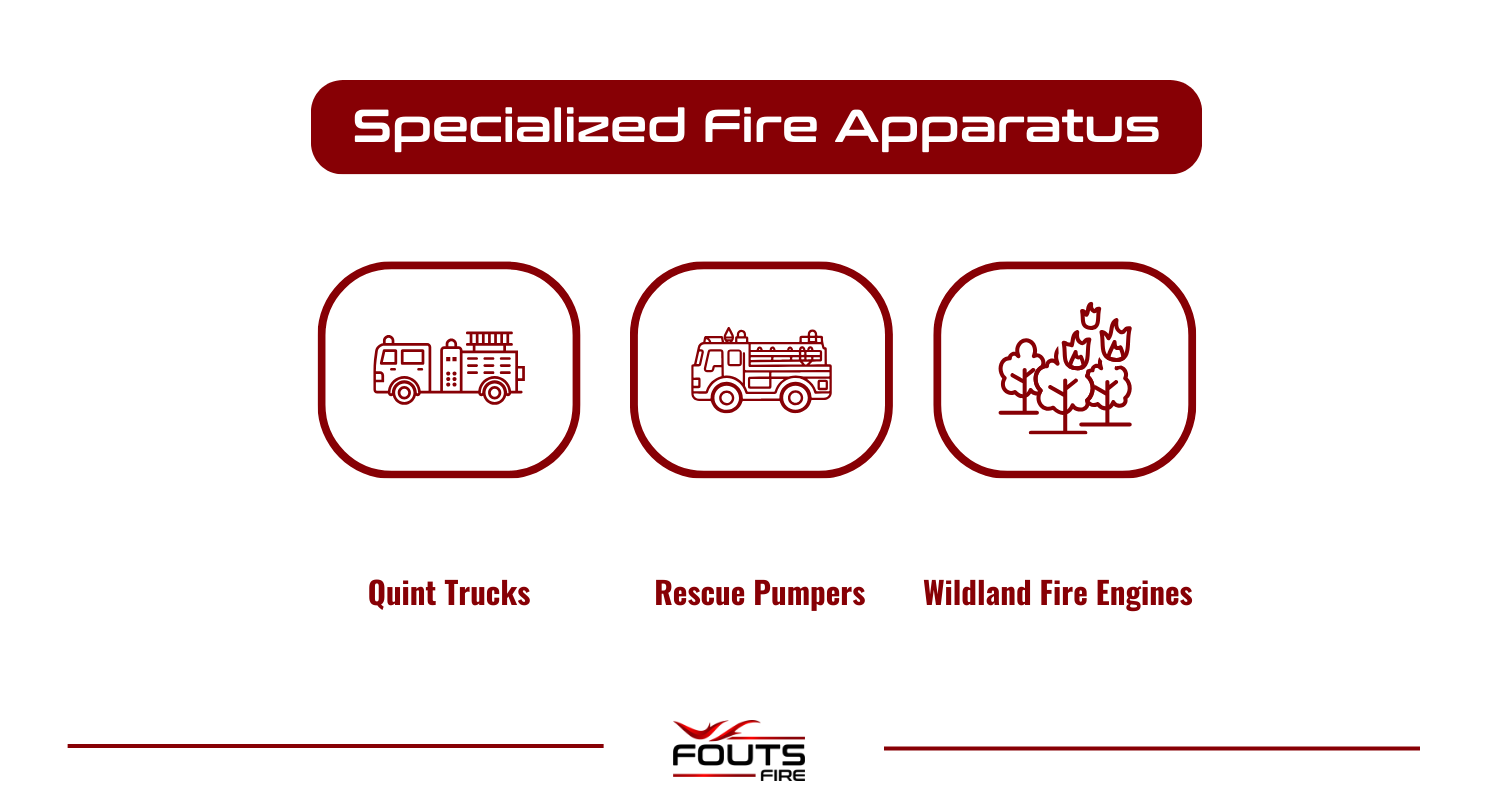
Quints combine five functions in a single vehicle: pump, water tank, fire hose, aerial ladder, and ground ladders. These hybrid apparatus blur the line between engine and truck.
Quint trucks are popular with fire departments operating with limited resources. However, quints may not match the performance of dedicated engines or trucks in every role.
Rescue Pumpers
Rescue pumpers are fire engines equipped with additional rescue tools, such as extrication equipment. They allow departments to handle vehicle rescues without deploying a full truck company, which is especially useful in smaller or rural departments.
Wildland Fire Engines
Also considered a brush truck, these utility vehicles are used to fight wildfires. Specifically designed to perform on rough terrain, brush engines help departments excel in off-road emergencies.
Discover High-Performance Firefighting Vehicles with Fouts Fire
Fire engines and fire trucks serve distinct but complementary roles in firefighting. Fire engines focus on pumping water and suppressing fires, while fire trucks provide aerial access, rescue capabilities, and specialized support equipment. Together, they form the backbone of an effective fire response. Understanding the difference between a fire engine and a fire truck highlights the specialized nature of modern fire service operations and the teamwork required to protect lives and property.
Fouts Fire delivers pumpers, tankers, rescue trucks, and more emergency vehicles to fire stations throughout North America. Explore our Fire Apparatus options or Find a Dealer near you.