At a Glance: Firefighter schedules are designed to provide 24/7 emergency coverage while allowing time for firefighters to rest and recover. The most common schedules include the 24/48 (24 hours on, 48 hours off), the 48/96 (48 hours on, 96 hours off), and rotating 12-hour shifts. Each of these schedules has distinct benefits and trade-offs for health, family life, and work-life balance.
Fires, medical emergencies, accidents, and rescues do not wait for business hours, which means someone always has to be ready to respond. Because of this constant demand, most firefighter work schedules look very different from most careers.
Firefighter schedules vary widely depending on department size, location, emergency call volume, and whether the department is career, volunteer, or a combination of both. Each shift calendar plays a major role in firefighter well-being, family life, and overall career satisfaction. The most common firefighter work schedules include the 24/48 schedule, the 48/96 schedule, and 12-hour shifts.
Why Having Different Firefighting Work Schedules Is Important
The Nature of Emergency Services
Emergency services never shut down. Fires, medical calls, hazardous material incidents, and rescues can happen at any time, day or night. Fire departments must maintain minimum staffing levels at all times to meet response time requirements and keep each fire engine ready for immediate response.
Unlike many professions, there are no true off-hours. Fire stations cannot close, and crews cannot simply clock out when demand slows. Schedules are designed to ensure continuous coverage while allowing firefighters time to rest, recover, and manage life outside the station.
Unique Operational Demands
Firefighters do much more than emergency response. During slower periods, crews train, maintain equipment, inspect apparatus, complete reports, and perform station duties. The job is physically and mentally demanding, and schedules must balance readiness with recovery. Different schedules attempt to meet these needs in different ways.
Different Firefighter Shift Schedules
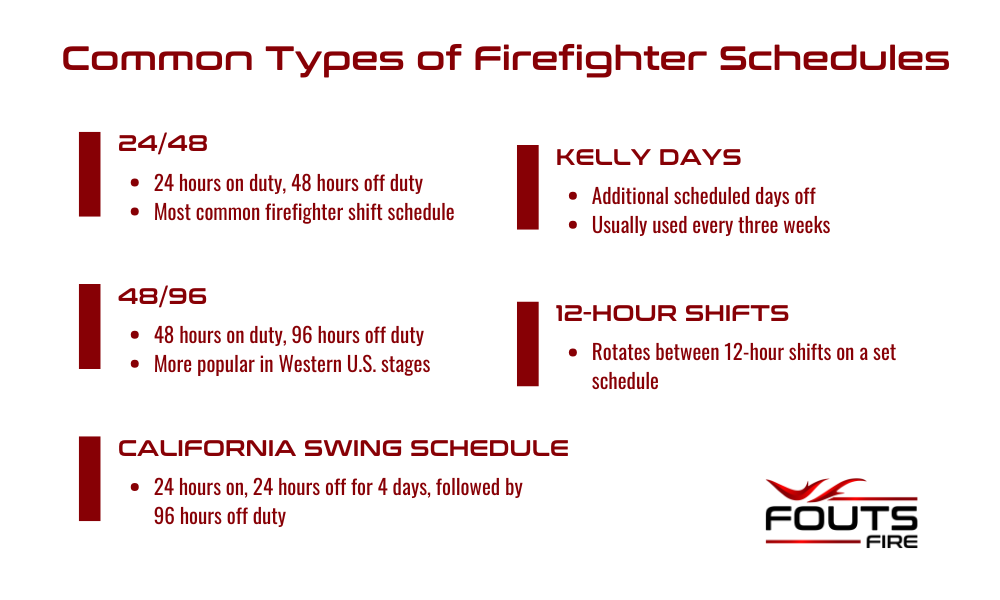
24/48 Schedule
The 24/48 schedule is one of the most widely used firefighter shift cycles in the United States.
- Structure: Firefighters work a 24-hour shift schedule, followed by 48 hours off.
- How it Works: Firefighters usually report in the morning and remain on duty for a full 24 hours, including overnight. If there are no calls, they sleep at the station. After the shift ends the next morning, they have two full days off.
- Pros: This schedule provides predictable time off and allows for family time, hobbies, or second jobs. Two consecutive days off help with recovery after a long shift.
- Cons: Twenty-four-hour shifts can be exhausting, especially in busy departments. If there are frequent nighttime calls, sleep deprivation is common.
48/96 Schedule
The 48/96 schedule is becoming more common, especially in western states.
- Structure: Firefighters are on duty for 48 consecutive hours, followed by 96 hours off duty.
- How it Works: Crews stay at the station for 48 hours straight, then are off for four full days. This reduces the number of times firefighters commute each month and provides long blocks of personal time.
- Pros: Four days off in a row allows for extended family time, travel, and recovery. It can be ideal for firefighters who live far from their station or have side careers.
- Cons: Working 48 hours straight can be physically and mentally demanding, especially for older firefighters.
Kelly Day and Debit Day Systems
Kelly days are additional scheduled days off designed to reduce average weekly work hours and control overtime costs. A firefighter may receive a Kelly day about every three weeks, rotating through different weekdays. Kelly days help departments comply with labor regulations and provide extra recovery time for crews.
Debit days work in the opposite way. Instead of giving extra time off, firefighters work an additional shift during the cycle to balance hours.
California Swing Schedule
The California swing schedule uses a series of 24-hour shifts.
- Structure: Firefighters rotate through a shift pattern of 24 hours on and 24 hours off for four consecutive days, followed by 96 hours off.
- Pros: This schedule offers four full days off, allowing time for rest after long shifts.
- Cons: 24-hour shifts can be grueling, and frequent shift changes can affect crew continuity and make it harder to hold second jobs.
12-Hour Shifts
Some departments use rotating 12-hour shifts.
- Structure: Firefighters rotating between these shifts on a set schedule, such as four consecutive days on duty and four days off.
- Pros: Shifts are shorter than 24-hour shifts, and firefighters go home after each shift. This can be helpful for family routines.
- Cons: Although these shifts are shorter, night shifts still disrupt sleep, and rotating between days and nights can be hard on the body.
Specialized Firefighter Schedules
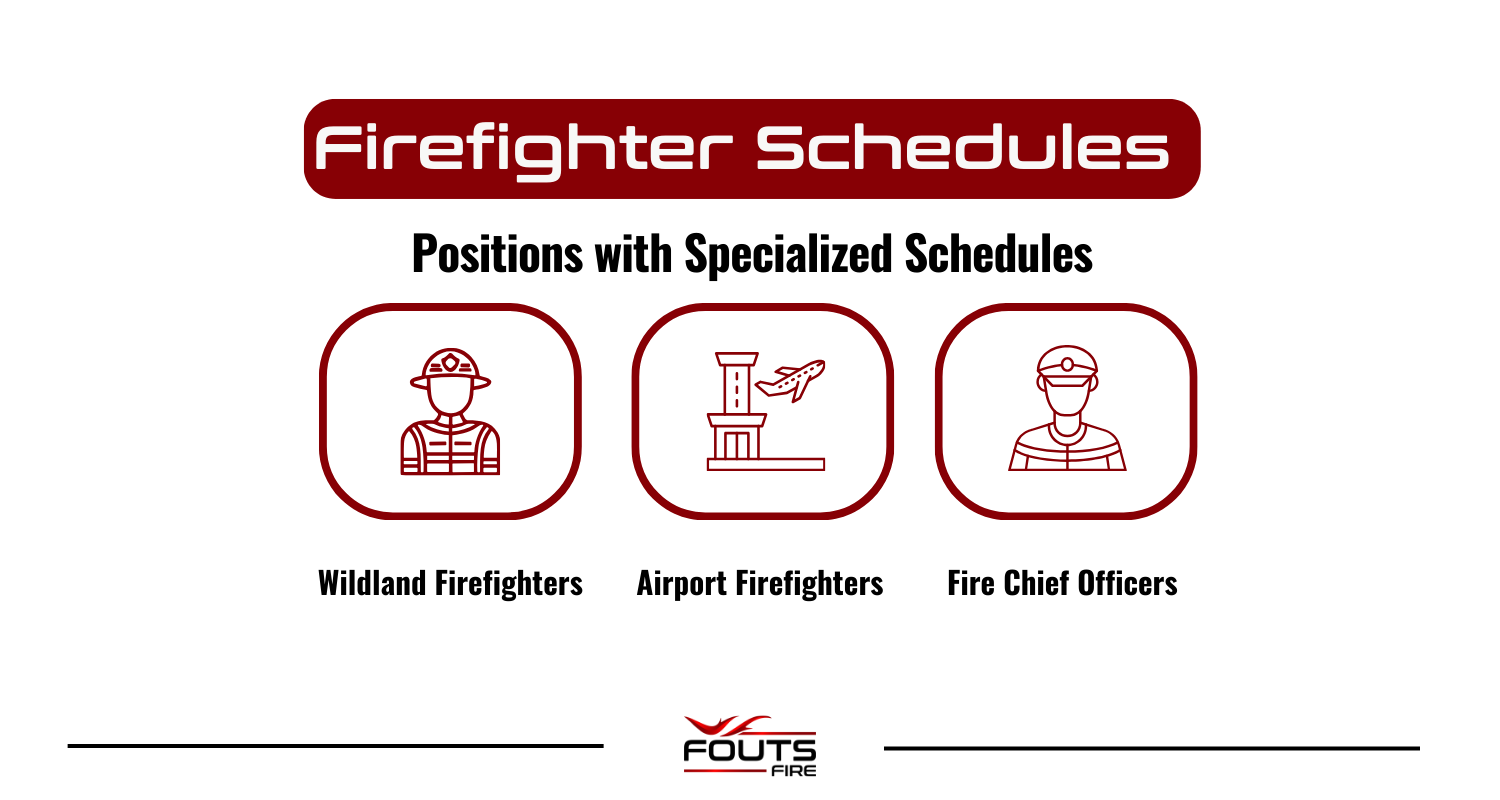
Wildland Firefighters
Wildland firefighters often work seasonal and highly unpredictable schedules. During fire season, they may be deployed for 14 to 21 days at a time, working long hours each day. Rest periods between assignments are short, and extended time away from home is common.
Airport and Industrial Fire Departments
These departments often follow 24-hour or 12-hour schedules. Call volume may be lower, but responses are highly specialized. Schedules are generally more predictable than municipal departments.
Chief Officers and Administration
Chief officers often work business hours but remain on call around the clock. Meetings, community events, and emergency responses extend their work beyond scheduled hours.
Impact of Schedules on Firefighter Life
Physical Health Effects
Shift work disrupts sleep patterns and can lead to long-term fatigue. Nighttime calls interrupt sleep quality and contribute to reduced alertness and lower reaction times. Over time, this can affect cardiovascular health, metabolism, and mental well-being. Fitness, nutrition, and recovery strategies are critical for long firefighting careers.
Family and Personal Life
Firefighter schedules that offer multiple days off allow for daytime family activities, school events, and appointments. At the same time, firefighters often miss holidays, birthdays, and family milestones.
Second Jobs and Side Careers
Many firefighters work second jobs due to extended time off. While this provides additional income, it can limit recovery time and increase fatigue. Some departments restrict outside employment.
Education and Training
Training and continuing education often occur during duty days. Many firefighters use off-duty days to pursue degrees or certifications, balancing long-term career goals with demanding schedules.
How Departments Determine Schedules
Departments choose schedules based on call volume, staffing needs, budget constraints, labor agreements, and firefighter input. Schedule changes typically involve union negotiations, trial periods, and department-wide feedback. Regulations under the Fair Labor Standards Act affect overtime calculations and work hour limits.
What Prospective Firefighters Should Consider
Firefighter schedules vary widely, with the 24/48 and 48/96 schedules being the most common for career departments. Each option comes with trade-offs that affect health, family life, and career satisfaction. Understanding these schedules is a critical step for anyone considering a career as a volunteer or full-time firefighter.
There is no perfect schedule, only the one that best fits an individual firefighter and their family members. Before accepting a position, research the department’s schedule and talk with current firefighters. Consider family impact, personal preferences, and long-term career goals.
Equip Your Fire Station with Fouts Fire Apparatus Models
Fouts Fire is committed to providing fire departments with the equipment they need to promote public safety in their communities. We offer pumpers, tankers, and more fire apparatus models that are designed to meet the needs of firefighters across the United States and Canada. Find a Dealer near you to view our full selection of vehicles and find the right apparatus for your department.