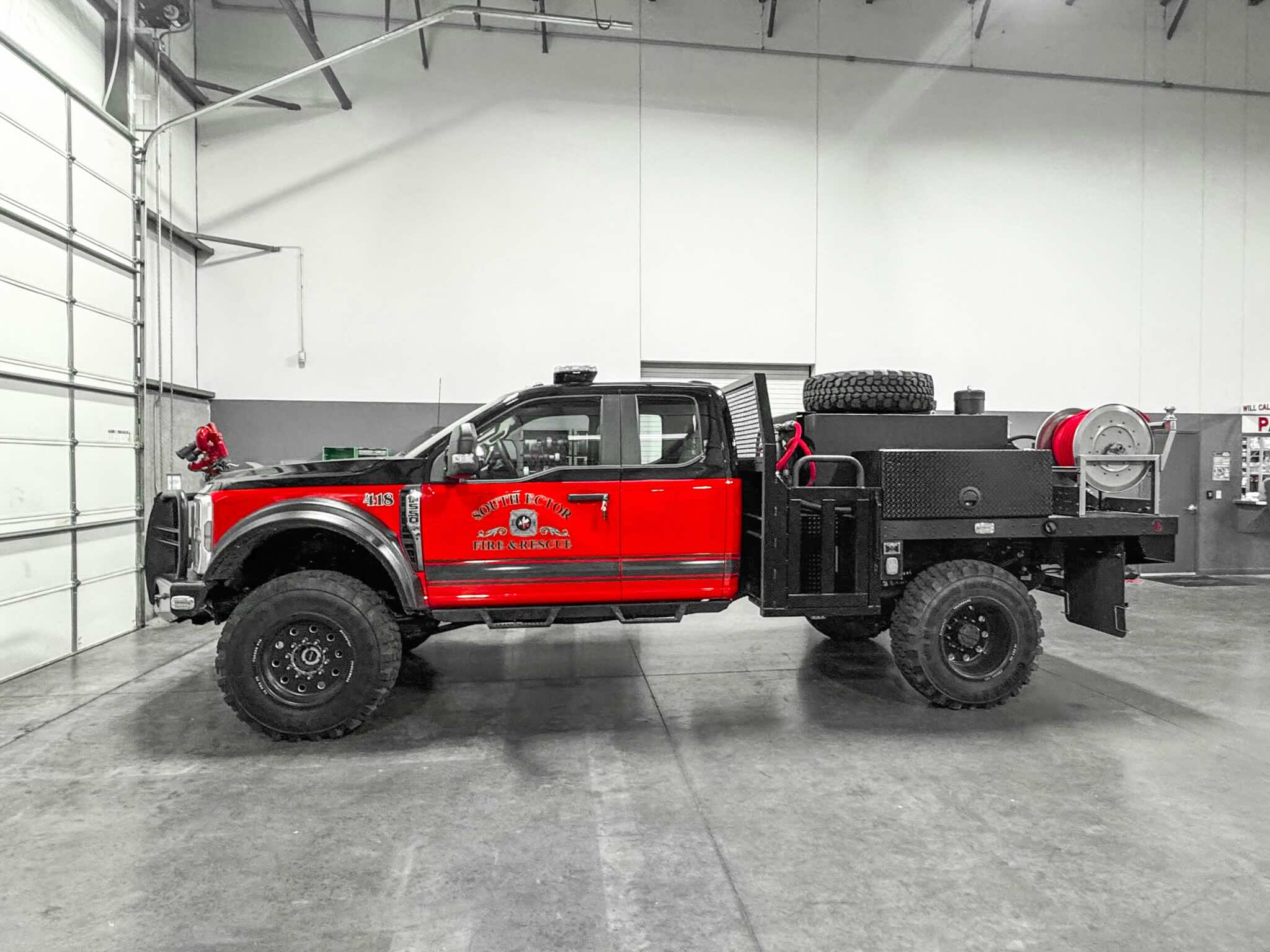
At a Glance: A Type 6 fire engine is a compact wildland engine designed for initial attack on brush and grass fires. These engines are valued for their off-road capability, pump-and-roll operations, and ability to access rugged terrain that larger vehicles cannot reach.
When wildfires threaten communities and landscapes, specialized fire apparatus designed for off-road terrain and rapid response become critical tools for firefighters. Not every fire can be fought with the same equipment, and not every road can handle a full-size fire truck. Fire engines are classified into types based on their capabilities, size, and intended use, with each type serving specific firefighting needs.
Type 6 fire engines are compact, versatile wildland engines designed for brush fires and wildfire suppression in rugged terrain. Understanding fire engine classifications helps fire departments, emergency planners, and those interested in wildland firefighting make sense of how these resources are organized and deployed.
Understanding Fire Engine Classifications
Fire engines in the United States are classified using a system established by the National Wildland Coordinating Group (NWCG). Types range from Type 1 at the largest end to Type 7 at the smallest, with each type defined by specific criteria like water tank capacity, pump output, hose capacity, and minimum staffing requirements.
Type 1 and Type 2 are structural fire engines designed for building fires and urban environments. These are the heavy-duty apparatus you typically see parked outside urban fire stations. Types 3 through 7 are wildland engines built for vegetation fires and off-road terrain rather than hydrant-fed structural suppression. Some engines serve dual purposes in departments with varied response needs.
This classification system matters for more than organizational purposes. Standardized typing creates consistent expectations for equipment and capabilities across agencies, which becomes critical during large-scale incidents when departments from multiple jurisdictions work together. The typing system also supports training and certification standards, ensuring that personnel assigned to a given apparatus type have the skills to operate it effectively.
What Is a Type 6 Fire Engine?
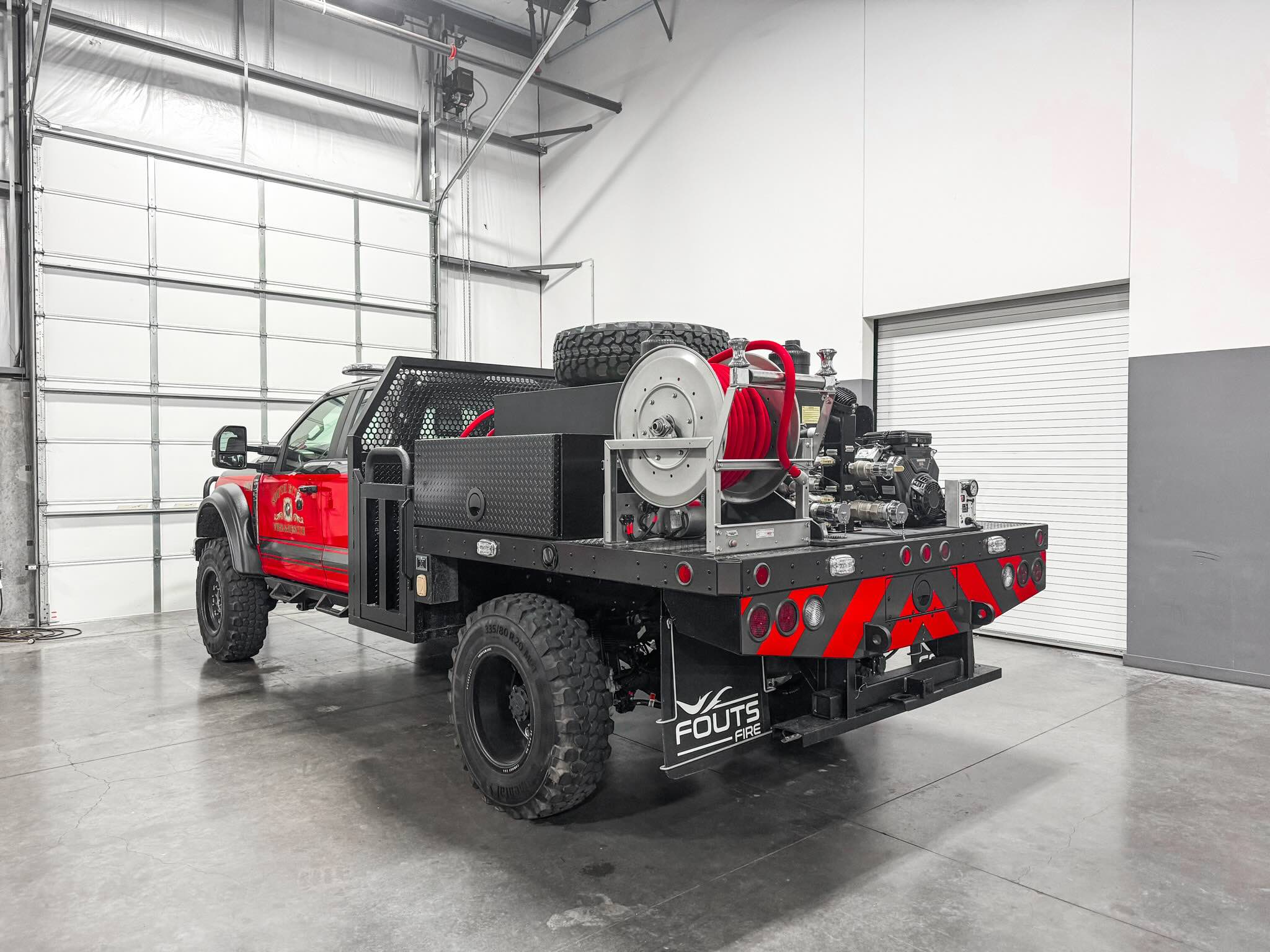
A Type 6 fire engine is a compact wildland fire apparatus designed primarily for initial attack on brush and grass fires. These engines are also called brush trucks, brush engines, or wildland engines. Type 6 engines are typically built on commercial truck chassis, often a heavy-duty pickup truck or medium-duty commercial platform, equipped with a water tank, pump system, and fire hose.
Type 6 engines are designed for initial attack on wildland fires and brush fires. These engines provide rapid response to fires in rural and wildland-urban interface areas, accessing terrain too rugged or narrow for larger apparatus. They also support operations on larger wildland fire incidents and handle patrol and mop-up operations after initial fire suppression.
Type 6 Fire Engine Specifications
Typical Equipment and Features
The primary components of a Type 6 fire engine include:
- Water tank
- Pump system rated for wildland firefighting
- Fire hoses (1-inch and 1.5-inch)
- Forestry hose in various diameters
- Hand tools (shovels, axes, Pulaskis)
- Portable water tanks (bladder bags)
- Fire extinguishers
- Communication equipment (radios)
- Diesel or gasoline engines
NWCG Requirements
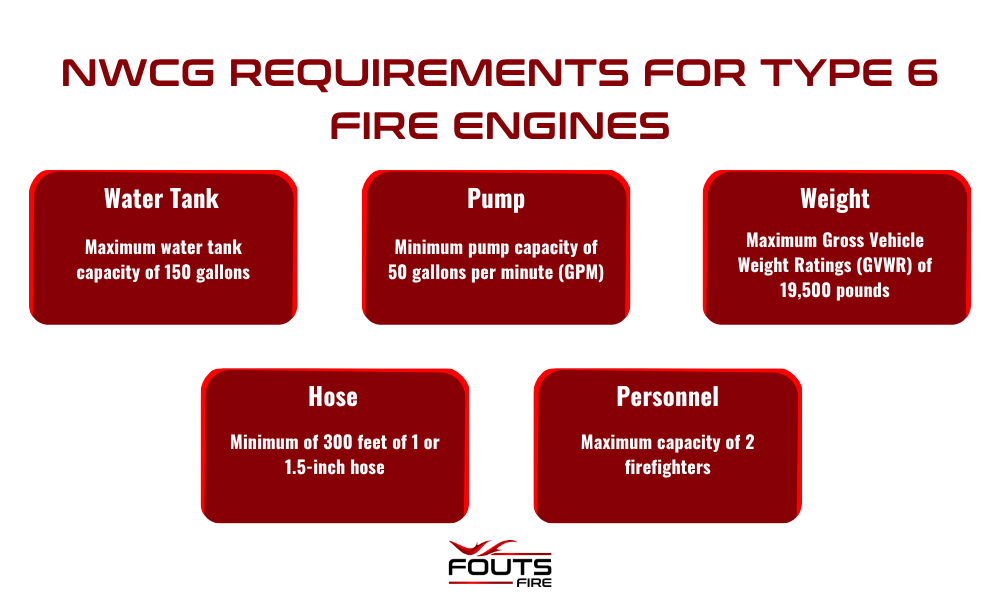
The NWCG sets minimum requirements for Type 6 engines to ensure they meet baseline capabilities for wildland firefighting, including:
- Minimum water tank capacity of 150 gallons
- Minimum pump capacity of 50 gallons per minute (GPM)
- Minimum of 300 feet of 1.5-inch or 1-inch hose
- Minimum personnel of 2 firefighters
- Maximum Gross Vehicle Weight Ratings (GVWR) of 19,500 lbs
Type 6 Fire Engine Features and Capabilities
Type 6 engines are versatile tools that can be quickly deployed for varied types of emergency services. They have adaptable equipment layouts that can be used for wildfire response, medical emergencies, technical rescues, vehicle accidents, search and rescue support, and more.
Off-Road Performance
Type 6 fire engines are built with features that offer off-road capabilities, including:
- Four-wheel drive for unpaved roads
- High ground clearance for rough terrain
- Durable suspension for uneven surfaces
- Appropriate tires for varied terrain conditions
Pump-and-Roll Operations
Pump-and-roll operation is the ability to pump water while the vehicle is moving. This is critical for mobile attack on running grass fires, where a stationary approach would simply allow the fire to outpace suppression efforts. Pump-and-roll requires a specialized pump system design and is a standard expectation for Type 6 and other wildland engines.
Crew Protection
The engine has features that protect crew members, including enclosed cabs with cab protection systems that keep firefighters safe during operations. Fire-resistant construction materials are standard, along with communication systems for coordination and emergency egress features.
When Type 6 Fire Engines Are Used
Initial Attack
When a brush or grass fire is first reported, the goal is rapid response and quick knockdown before the fire grows. A Type 6 engine can reach the fire, establish a water supply from onboard tanks or a nearby natural source, and begin suppression while additional resources are dispatched if needed. For many small fires, a single Type 6 crew handles the incident from start to finish.
Wildland-Urban Interface (WUI) Fires
A WUI fire occurs in areas where developed communities meet remote areas of undeveloped wildland, presenting unique firefighting challenges. If a fire threatens structures that a Type 1 or Type 2 engine cannot reach, a Type 6 can get in, protect property, and provide the quick response that fast-moving fires demand. Narrow driveways, rural roads, and terrain that cannot support heavy apparatus make Type 6 engines particularly valuable in these areas.
Agricultural & Rural Fires
Agricultural fires, such as crop fires, pasture fires, roadside vegetation fires, and rangeland fires, often occur in areas without hydrant systems, making draft capability and onboard water supply valuable. On large wildland fires managed by multi-agency teams, Type 6 engines play important support roles with their draft capability and onboard water supply.
Considerations for Fire Departments
Advantages
Type 6 engines offer meaningful advantages for departments evaluating apparatus options:
- Lower Costs: These engines are less expensive than larger apparatus models
- Reduced Maintenance: They are easier to operate and maintain
- Standard Compatibility: They fit in standard fire station bays without requiring facility modifications
- Versatility: These engines can perform across incident type, adding value for departments with diverse response profiles
- Rapid Response Times: Their quick deployment makes them effective for time-sensitive initial attack scenarios
Disadvantages
However, Type 6 engines have some limitations:
- Modest Water Capacity: These engines hold between 150 to 500 gallons, which means crews must manage supply carefully and plan for resupply on extended operations
- Limited Use for Structure Fires: They are not equipped for structural firefighting and cannot serve as the sole apparatus for departments with building fire responsibilities
- Limited Capacity: These engines has less space for crew and equipment than other types, restricting their use on complex incidents
- Mutual Aid Restrictions: They may not meet typing requirements for a mutual aid system
Department Considerations
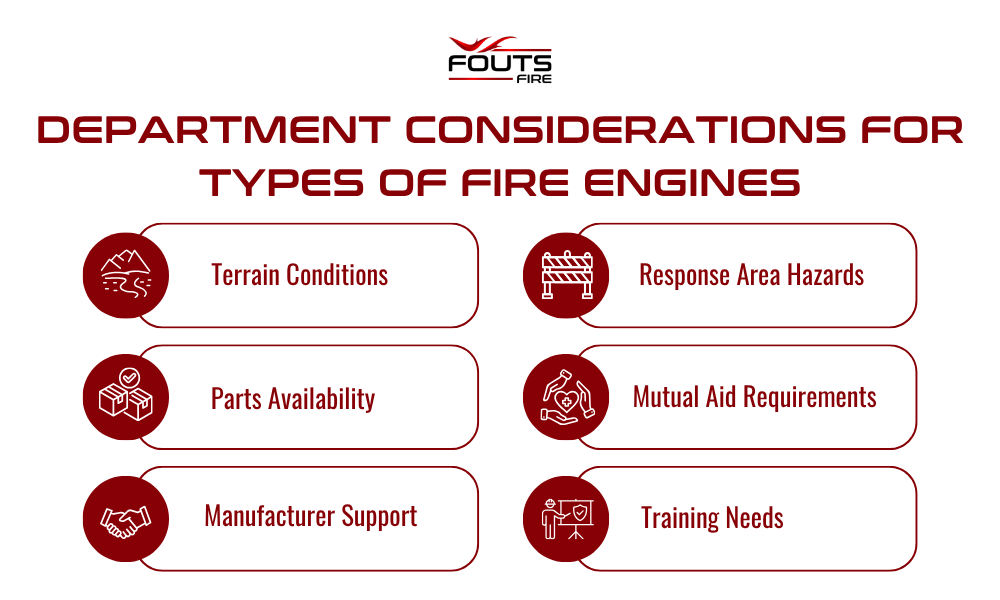
Departments evaluating Type 6 apparatus should assess:
- Primary Response Area Hazards
- Terrain and Road Conditions
- Mutual Aid System Requirements
- Parts Availability
- Manufacturer Support
- Training Requirements
Finding the Right Fire Engine with Fouts Fire
Type 6 fire engines are compact, versatile wildland apparatus designed to enhance firefighting capabilities in terrain where larger engines cannot operate. Their off-road performance, pump-and-roll capability, and rapid deployment make them valuable tools for initial attack and support operations in rural areas and on rugged terrain. Fire departments evaluating apparatus needs should consider how Type 6 engines fit their response requirements and work with experienced apparatus manufacturers to select the right option for their specific needs.
Fouts Fire offers several standardized fire apparatus models, including Type 6 engines. Through our nationwide dealer network, we help fire departments find the right apparatus for their needs and deliver them right to the station. Find a Dealer near you to explore our full apparatus lineup.